







There are few studies in Brazil on the role of the Public Defender’s Office in achieving reproductive justice and, specifically, in guaranteeing the right to abortion. The institutional paths are tortuous for those who request the termination of pregnancy in health services, with several barriers to access to the procedure even within legal parameters. In a scenario of legal restrictions and human rights violations, the Public Defender’s Office acts as a mediator of demands with health services or through requests for judicial authorization from the courts. This article discusses pioneering actions and initiatives by the Public Defender’s Office of the State of Rio de Janeiro in recent years to guarantee legal access to abortion, against threats of regression in law and practice.
As the United States approaches its rescheduled 4th Universal Periodic Review (UPR), individuals’ sexual and reproductive health and rights continue to deteriorate across the country. Since our previous submission, there has been an increase in both restrictions on reproductive health-care access (in particular abortion care), and in targeted, state-sanctioned violence, intimidation, discrimination, and harassment of communities by U.S. Immigration and Customs Enforcement (ICE) and Customs and Border Protection (CBP).
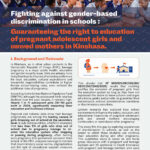
Based on IDRC‑supported qualitative research conducted in Kinshasa, this policy brief examines how school environments shape the educational pathways of pregnant adolescent girls and unmarried young mothers. Despite recent policy reforms prohibiting their exclusion from schools, the findings reveal persistent stigma and systemic barriers. The brief calls for coordinated evidence‑informed action across education, health, and community systems to uphold girls’ right to education and advance gender equality.
In Central African Republic, women are arriving at hospitals with life-threatening abortion complications—too late for some, and almost all are preventable.


Martine Naigna was arrested for helping a woman access contraception without a husband’s approval—and she kept fighting.
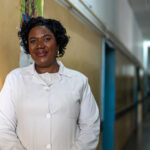
A tragic encounter early in her nursing career set Estrela Góia on the path to becoming a dedicated abortion champion who partners with Ipas Mozambique to train providers and expand access.

In August 2025, Ipas Bangladesh and partner organizations convened the first-ever urban youth conference in the country, themed “Youth Voice for Sustainable Sexual and Reproductive Health Rights (SRHR).”
This study looks at the experiences of 440 women who received abortion care at 13 Ipas Africa Alliance-supported public health facilities in nine districts of Uganda.