







Rakshya Khadgi
Dalit daughters demand justice
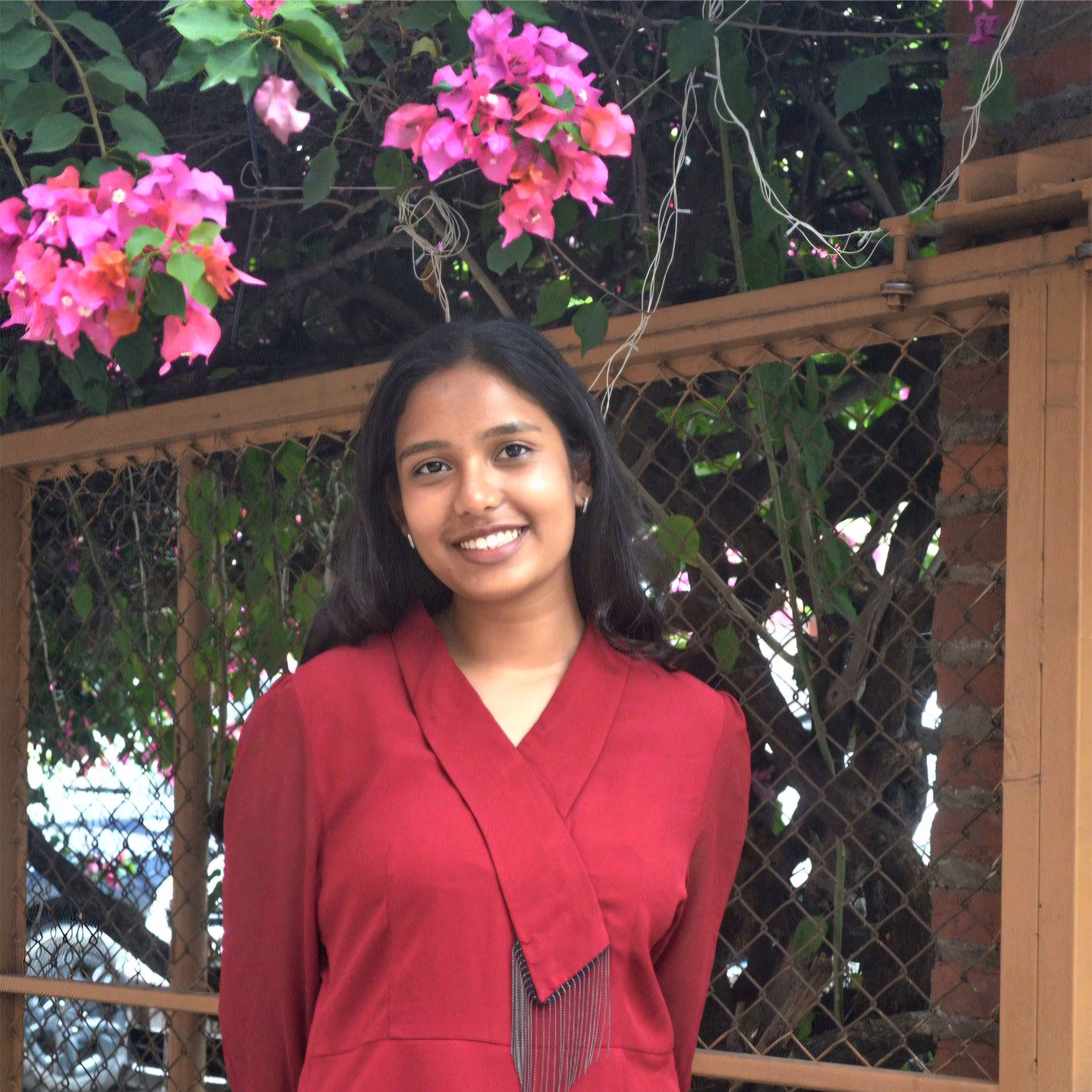
Rakshya Khadgi (she/her) is a feminist activist and anthropology student from Nepal whose work centers on sexual and reproductive health and rights, caste and social inclusion, and social justice. She advocates equity through research, writing, storytelling, and community engagement to amplify marginalized voices and promote community-centered change.
This essay began as rage-filled writing on the phone, written after hearing the news about Anandi and Rinku. She only came across the news because of her active interest in Dalit issues—not because mainstream media gave it sufficient coverage, nor because it was widely shared on social media, as often happens with similar incidents. This essay draws from media reports, advocacy documents, and testimonies gathered through conversations with Madhesi/Dalit activists. It gives voice to the life and death of those who are systemically ignored by the mainstream.
The news of their death reached us before their names ever did. By the time the headlines spelled out Anandi Devi Sada or Rinku Sada, their life had lost its breath, reduced to a police report, a statistic, a whisper. I think about this often: In my country Nepal, Dalit daughters’ names are spoken aloud only after they are gone. I am tired of condolences. I am tired of statements of concern that arrive like wilted flowers, always too late, always too soft. I am tired of silencing; I am tired of negligence.
Why do we have to die to be heard?
As a woman, I have lost count of the times I have seen our grief turned into a stage for the powerful. The authorities in uniform who arrive late to the scene. The politicians who visit the family home with folded hands and empty promises. The reporters who linger, asking for photographs of the body. The development practitioners, who are ready to use the very story to secure grants for their organization. And then, after a few days, the silence. The forgetting. When I read about Anandi Devi and Rinku Sada, I could hear the familiar script being rehearsed: the perpetrators accused of rape and murder are not shunned; they are protected. They are someone’s son, someone’s nephew, and someone’s voter. Shame does not follow them; it falls instead on the girl’s family. When we are raped or assaulted, it is not our perpetrator who is shamed; it is our parents, our siblings, our entire community.
Justice for Dalit women is decided in small, airless rooms
Justice for Dalit women is not measured by truth or law. It is decided in small, airless rooms where the accused and the police sit together, failing to acknowledge the gravity of injustice, hence drawing up settlements that mask the injustice with thin paints of compensation, performative condolences and/or suggestions for reparation such as marrying off the victim to her rapist. The decision to investigate the violence and deaths faced by Dalit women—or not—is made in rooms where no women, and certainly no Dalit women, are present. And if they are, their voices are ignored. Local leaders, police officers, and politically connected men decide how much these daughters are worth.
When I say “worth,” I mean it in the most literal way. The families of Anandi Devi and Rinku Sada were offered cash settlements. The apologists spoke about money as if it could mop up the blood, silence the painful cries, and restore some mythical “honor” to the family. A few thousand rupees, an ingenuine apology, unsolicited condolences, and the flimsy promise that “this will not happen again”. That is, until it does—every time! But we are not only stories of loss. We are not waiting to be saved. The blood in our mouths tastes of rage, but also of memory. The kind that refuses to fade. This is not a eulogy for Dalit daughters; it is a demand, a refusal, and a record of our resilience.
Anandi Devi Sada
On a cold morning in Siraha district of Madhesh, Nepal, Anandi Devi Sada’s family reported that their daughter had been found dead under suspicious circumstances after an alleged sexual assault. The accused were not strangers; they were young men from the same area: Sanjeev Yadav and Shyam Sundar Yadav. Her family lodged a complaint, expecting the police to act swiftly. Instead, the system of delay and denial began its slow grind. The next morning, instead of arrest warrants, the perpetrators’ fathers and a local schoolteacher visited Anandi’s home. They came not to grieve, but to negotiate. Their proposal was simple: to settle the matter within the village. When the family refused, the accused sought help from the District Police Office. Relatives met with the then District Police Chief three days after the incident. After that meeting, the family began receiving summons from the Area Police Office. There were offers of money—small fortunes for a poor Dalit family, but also poison.
“The police told us we are poor and asked where we would find money to fight a legal case,” Anandi’s mother shared with the media. “They advised us to take the money and settle.” When the family continued to resist, police claimed the accused had fled to India, as though borders could erase crimes. For weeks, there were no arrests. Only after media pressure and public outrage did the provincial police take up the case again. Yet even then, multiple attempts were made by police and authorities to withdraw from the case. It is only now, after sustained pressure from advocacy groups, that the case is being investigated.

I am tired of statements of concern that arrive like wilted flowers, always too late, always too soft.
Rinku Sada
Like Anandi, Rinku was another Dalit daughter whose life was stolen by the entwined forces of caste- and gender-based violence, augmented by state negligence. Rinku reportedly left her home one evening to relieve herself and never made it back safely. Her family says she returned the next morning in tears, telling of being abducted and gang-raped by three men from the area. Instead of taking the case to the police, local leaders held a panchayat: the so-called village mediation. But they didn’t do this to seek justice. They had stepped in to control the story. The men who committed the rape were “forgiven” by the panchayat, as if the local leaders were entitled to forgive. The rule of law was a puppet in their hands, and they declared that NRs 140,000 (approx. 800$ USD) was enough to make it all go away. Because apparently, for them the price of a Dalit girl’s life is negotiable. The family was explicitly barred from seeking justice through formal channels. As threats against her family escalated, Rinku was found suspiciously hanging in her home days later. At first, police called it an abetment of suicide. Only after media scrutiny and public pressure did they expand the investigation to consider rape and possible murder. Six people were charged, but from the very beginning, the case was pushed towards a compromise. The entire process felt less like a legal investigation and more like a bargaining table. Rinku’s family, like Anandi’s, faced pressure to settle, to remain silent. The community whispered about their “honor,” as if it were a delicate glass vase they had carelessly dropped. The perpetrators’ honor, somehow, remained untouched. The shield of caste, class, political power, and masculinity is so strong that it can cocoon anything. Their stories echo each other, not as isolated tragedies, but as part of a pattern where caste, patriarchy, and regional identity collude to deny justice.
The shield of caste, class, political power, and masculinity is so strong that it can cocoon anything.
Caste, gender and regional identity
The caste system in Nepal, though constitutionally punishable, remains deeply embedded in social structures and everyday interactions. Rooted in the Hindu varna and jati hierarchy, it operates as a mechanism of social stratification that governs marriage, occupation, access to resources, and notions of purity and pollution. While its manifestations differ across regions, its effects are particularly severe for Dalit communities, who have historically been relegated to the bottom of the hierarchy and forced into demeaning and exploitative labor.
Madheshi Dalits bear the compounded weight of caste, class, and regional marginalization. Their struggles are deeply entangled with the broader exclusion faced by Madheshi communities, who have historically been treated with suspicion and denied equal recognition within the Nepali state. Madheshis are often perceived as outsiders, with their loyalty to Nepal constantly questioned under toxic nationalist discourse. This suspicion has translated into systemic barriers to citizenship, where Madheshi families encounter discriminatory legal and bureaucratic hurdles in securing nationality- leaving many stateless. For Madheshi women, these barriers are further entrenched by patriarchal citizenship laws that prevent them from passing on citizenship to their children, worsening the cycle of exclusion. Such practices of internal colonization deny Madheshi people, and especially Madheshi Dalits, full rights and dignity as citizens.
Madheshi Dalits are pushed to the margins through discriminatory practices: the bonded or exploitative labor system, denial of basic rights such as education and drinking water, and exclusion from decision-making spaces, public facilities, religious sites, and community events. Women within these communities’ experience an added layer of discrimination, such as gender-based violence and restrictions tied to caste purity, patriarchy, nationality and regional identity. The persistence of such hierarchies reveals that legal reform alone cannot dismantle caste oppression; it is woven into cultural, economic, and political life. For Madheshi Dalits, liberation is not simply about the removing discriminatory laws, but about transforming deeply entrenched social attitudes and structural inequalities that have long defined their lives. Yet even under these pressures, these communities have continued to organize and mobilize, demanding equal recognition and justice, though their voices are too often ignored or silenced by the state and civil society.
In Nepal, caste, gender and regional identity are not separate lines of oppression; they are intertwined threads tightening around the throats of those born on the unfavored side of these identities. The historical system of caste hierarchy already dehumanizes Dalit bodies as “lesser” while patriarchy adds another layer, reinforcing a perceived entitlement to control, use, and punish women and queer bodies. Adding to that, any person, case, or matter stemming from Madhesh is subjected to callous neglect perpetuated by the systemic ‘othering’ of Madhesh from mainstream national issues. This multilayered bind, hence, does not just push Madheshi Dalit women towards vulnerability to violence but also suppresses the voices that dare to seek justice, only to be met with systemic ignorance and erasure from the larger public sphere.
In Nepal, caste, gender and regional identity are not separate lines of oppression; they are intertwined threads tightening around the throats of those born on the unfavored side of these identities.
Patterns of silence and settlement
Anandi and Rinku may have never known each other in life, but their stories now march together creating hope for a new wave of justice—unlike the past when such violence was trivialized, normalized and ignored. Both were young, Dalit, and female. Both faced not only personal violence but the violence of a corrupt system that protects perpetrators. In both cases, the police acted not as protectors of justice but as defenders of the accused, denying the crimes and reinforcing the very injustice they are meant to prevent. Settlements were pushed, cash was offered, and delay was weaponized until evidence faded, and witnesses could be worn down. These are not isolated tragedies. They are the rhythm of a society that has decided which bodies matter, and which can be discarded. The caste hierarchy and patriarchy work together to keep Dalit girl’s invisible in life, and barely visible in death.
The push for “settlement” is not unique to Anandi or Rinku’s families; it is a repeated pattern that silences justice for Dalit women. Families are pressured by village panchayats, political actors, or even state officials to reconcile with perpetrators, often through marriage, money, or intimidation. These forced settlements turn violence into something negotiable, erasing accountability and deepening impunity. Reconciliation with rapists has happened in the other regions of Nepal too, as in the case of Angira Pasi, who was forced to marry her rapist. Yet when such crimes happen in Madhesh, they rarely spark national outrage. Instead, the panchayat becomes a convenient scapegoat, allowing centralized political and social actors to dismiss these cases as “too far,” “too complex,” or “too local to intervene.” Anandi and Rinku are only two lives—two cases that came into public view because of resilient and relentless efforts to demand justice. One cannot help but wonder how many other young girls and women have been lost to the same cycle of violence and coerced compromise, their stories buried before they ever reached the world’s ears. And yet, even against these suffocating silences, families and communities refuse to bend. The cracks in this system of impunity are found in small but powerful acts of resistance.
Resistance in refusal
In both cases, the families’ refusal to settle was an act of profound resistance. It was a refusal to let caste, patriarchy or poverty write the ending to their daughters’ stories. It was a refusal to normalize the idea that poor Dalit girls and their families can be bought off. And it was a refusal that cost them: financially, emotionally, and socially.
We often talk about resilience as if it is something quiet, patient, and polite. But for Dalit daughters, resilience can be loud. It can be the kind that shows up at police stations every day to demand updates, not only by kin, but by complete strangers. It can carry rage and grief to police stations, courtrooms, and public rallies held solely by Dalit activists. It can be the shy mother who speaks the unspeakable in front of mics and cameras in her own language despite the barriers. A legal team that is providing free legal services to follow up on the case in court. It can be the kind that says, “You will not bury this story. We will not settle.”
And in this refusal lies the seed of resilience, a quiet but unyielding resistance against being silenced.
We often talk about resilience as if it is something quiet, patient, and polite. But for Dalit daughters, resilience can be loud.
My positionality
I am not Rinku. I am not Anandi. I do not know the joy, pain, and resilience of being a Madheshi Dalit woman. But I empathize.
As a Kathmandu-born woman with access to spaces and language that amplify my voice, I cannot ignore the silence that falls when violence occurs in Madhesh. The media in Kathmandu closes its eyes. Civil society turns a deaf ear. Cross-regional feminist solidarity falters. The State ignores. Yet in these silences, Madheshi Dalit daughters’ bodies carry the heaviest weight.
I come from an Indigenous group, Newa, within which I carry the identity of a marginalized caste, though my life has been shaped by some advantageous identities as well. That gives me both distance and responsibility. Despite the differences, the struggles resonate. We grow up being warned about the harm that can be done to our bodies—not just as women, but as women from oppressed castes. And we learn early that when harm comes, our pain and grievances are often denied or ignored by the very systems meant to protect us. I was born knowing the rules. So were my friends. The rules were never written down, yet they were everywhere: in the way my mother’s eyes lingered on me before I stepped out of the house; in the way my sister’s voice softened to warn me about certain roads, certain shops, and certain people; in the whispered stories of girls whose names were never spoken again, because they now carried their rapists’ children, as if they were to be blamed.
I read and reread Sarita Pariyar’s “Untouchable stories of touchable vaginas.” It mirrored what I learned not first-hand, but through listening, and watching older girls navigate the world. They didn’t laugh loudly in public. They didn’t linger in the market. They lowered their gaze when certain men passed. They measured every gesture to avoid being noticed, or worse, targeted. Resilience, for us, was not a choice; it was survival. We learned to watch everything—the tone of a man’s voice, the way his eyes lingered, the distance he kept. We memorized safe paths and unsafe ones. We walked in groups. Still, we are never completely safe.
Yet resilience also meant defiance. It was my friend continuing to go to school despite being harassed. It was my cousin filing a police complaint against her cyber bullies even when told it was useless. It was all of us girls writing a joint letter to the school authority against an abusive teacher. These acts did not dismantle the rules, but they cracked the wall.
When Anandi’s and Rinku’s families refused settlements, I recognized the same stubbornness I grew up with. The refusal to let someone else put a price on your dignity. Knowledge that accepting their money means accepting their power. That is what mothers mean when they say: We will not be bought. The injustice can’t be settled with money. I still live under the shadow of these rules, but I also live with the memory of women who bent and broke them. I carry their defiance like an inheritance. And when I speak Anandi’s and Rinku’s names, I refuse to let them be reduced to cases or statistics. They are reminders that our lives are worth more than the silence they try to bury us in.
I carry their defiance like an inheritance. And when I speak Anandi’s and Rinku’s names, I refuse to let them be reduced to cases or statistics.
Reproductive justice as collective survival
Reproductive justice cannot be separated from caste justice. The right to decide what happens to our bodies includes the right to say no to violence without fearing that the state, the police, or our own neighbors will side with the perpetrator. It includes the right to demand justice without risking starvation because we spent all our savings on legal fees. It includes the right to live without the constant calculation of danger: should I walk this road, should I speak to this person, should I take this job—because every decision carries the weight of survival. When we talk about reproductive justice, too many people still imagine it as only the right to decide whether or not to have children. But for Dalit girls and women, the conversation must start even earlier—with the right to live. The right to walk home safely. The right to basic infrastructure, such as toilets. The right to exist without their bodies being treated as available, disposable, or to blame for the violence inflicted upon them.
Reproductive justice also demands more than survival. It requires strong policies, accountable institutions, and a justice system that does not weaponize delay, settlement, or silence. It requires that police, courts, and communities act as protectors, not gatekeepers of impunity. Reproductive justice is not only about bodily autonomy—it is social justice, intersectional justice, and the promise of dignity for all. Anandi and Rinku remind us of this truth: until Dalit girls can live, walk, and dream without fear, the fight for reproductive justice will remain unfinished.
Our resilience
When activists in urban spaces speak of bodily autonomy and reproductive justice, I think of Anandi’s mother. She did not use legal jargon or policy terms. She spoke in the language of survival: “We will not take the money. We will not settle. We will not be silent.” This resilience is reproductive justice in its rawest form, the refusal to let someone else decide the value of a daughter’s life. For us, reproductive justice is not an abstract policy goal. It is the fight to survive violence and still have a future: to dream, to choose, to love, to parent or not to parent, on our own terms.
When a Dalit daughter is attacked or murdered, we do not mourn quietly. Women rise, unshakable, threatening the very silence the system relies on. Across Dalit women’s movements, a quiet but fierce shift is underway: we are done begging. Begging reinforces the illusion that justice is a gift from the powerful. Now, we demand, not politely, not cautiously, but together, with voices that can shake walls. Our resilience is radical. It is joy in the face of grief. It is dancing after court hearings, sharing food after protests, braiding a young girl’s hair and telling her she is beautiful, not despite the world she’s in, but in defiance of it. We refuse to let them take away our joy and solidarity. It is singing songs of rebellion:
बलत्कारी होस् तँ! यो पितृसत्ता, यो अदालत, यो प्रहरी, यो कानुन, यो सिङ्गो समाज, यो दमनकारी राज्य हो बलत्कारी!
(Translation: The rapist is you—the patriarchy, the courts, the police, the law, the whole society, the oppressive state!)
We save each other. Justice for Anandi Devi and Rinku Sada will not be achieved through promises or policies. Their justice is carved from every act of resilience, every refusal to remain silent, every gathering, and every demand for accountability. If the system is not meant to protect us, our resilience will be disruptive. It must interrupt ceremonies, question leaders, and refuse settlements that silence us. Together, we build our own protection. We document our cases, train our people in the language of law, and connect with feminist movements across national and international borders; from Black feminists in the U.S. to Indigenous women in Southeast Asia and anti-caste activists in India. The violence may be local, but our resilience and resistance are global. And this unity is our strength against injustice. Dalit daughters do not wait to be saved. We mourn loudly, rage publicly, and scream the names the system tries to bury. We break like storms, flooding gates that are built to keep us out. We are not finished. We will be resilient until we no longer need to be.
And yet, resilience is not the end; it is the bridge. The day will come when Dalit daughters’ names are spoken not in mourning, but in celebration of lives fully lived. Until that day, we refuse silence; we refuse settlements, and we refuse to be buried. State negligence may persist, but our courage, our solidarity, and our relentless fight for reproductive and intersectional justice will not falter. From the streets of Madhesh to all the corners of the world, Dalit women rise, and together we are unstoppable.
बलत्कारी होस् तँ! यो पितृसत्ता, यो अदालत, यो प्रहरी, यो कानुन, यो सिङ्गो समाज, यो दमनकारी राज्य हो बलत्कारी!
Translation: The rapist is you—the patriarchy, the courts, the police, the law, the whole society, the oppressive state!

Together, we’ll keep moving forward.