







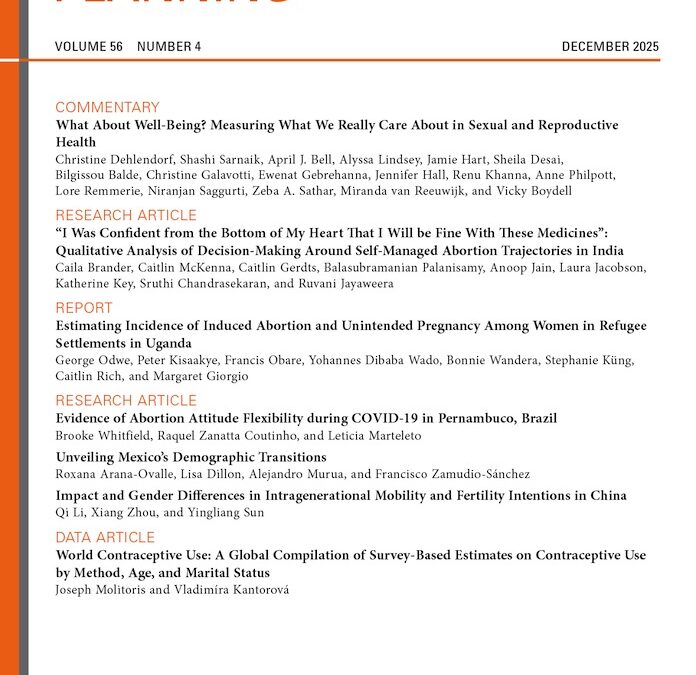
What About Well-Being? Measuring What We Really Care About in Sexual and Reproductive Health
This publication offers a new definition of sexual and reproductive wellbeing and a short measure to assess it, shifting attention toward whether people are able to live the sexual and reproductive lives they want, not just whether services were delivered.
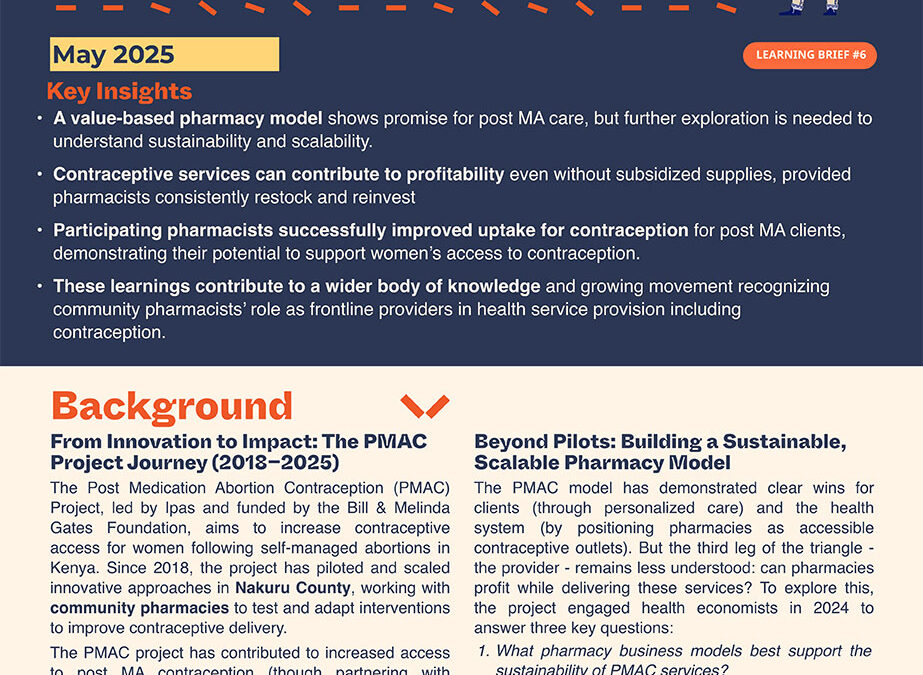
Pharmacy First: Sustaining and Scaling Post Medication Abortion (MA) Contraceptive Services in Kenyan Community Pharmacies
The PMAC model has demonstrated clear wins for clients (through personalized care) and the health system (by positioning pharmacies as accessible contraceptive outlets). But the third leg of the triangle – the provider – remains less understood: Can pharmacies profit while delivering these services?

Applying an intersectional climate justice lens to understand climate crisis impacts on sexual and reproductive health and rights and identify local solutions: Qualitative findings from Khulna, Bangladesh
In cyclone-affected communities in Bangladesh, researchers found that extreme weather can make it harder for people to get the sexual and reproductive health care and information they need, and that marginalized groups, such as low-income and displaced people, experience the most severe disruptions.
Expanding access to safe ambulatory manual vacuum aspiration abortion up to 15 weeks following Argentina’s legal reform: an observational study in the public health sector
In Argentina, a 2020 law change provided the opportunity to explore how legal reform impacts access to quality care. This study found that while the safety of abortion care in the study sites remained consistent, legal reform expanded access to safe abortion services up to 15 weeks, especially for disadvantaged women.