Jun 23, 2020
This study aimed to support the development of a mobile phone intervention to support postmenstrual regulation family planning use in Bangladesh. It explored what family planning information women want to receive after having a menstrual regulation procedure, whether they would like to receive this information via their mobile phone, and if so, what their preferences are for the way in which it is delivered. Participatory interviews were conducted with 24 menstrual regulation clients in Dhaka and Sylhet divisions in Bangladesh.
Jun 23, 2020
This evaluation assesses the factors that influence contraceptive uptake among adolescents and young women seeking abortion care in health facilities. We analyzed client log book data from 921,918 abortion care cases in 4,881 health facilities in 10 countries from July 2011 through June 2015, and found that programmatic support to health systems, including provider training in contraceptive counseling and provision, was associated with women’s higher acceptance of postabortion contraception.
Jun 23, 2020
Numerous instances have been reported where women have been denied termination of pregnancy services for pregnancies arising out of rape, incest and sexual violence. There is also the rising issue of women and girls being forced by the police to keep the pregnancy in cases of incest or rape to preserve the infant to be used to retrieve DNA for evidence while prosecuting the perpetrator.
Jun 23, 2020
During last year’s national exams, media reported alarming cases of girls who sat the papers in delivery rooms or went into labour in the exam room. These statistics show the need for urgent action and awareness to enable the youth to manage their own sexual and reproductive health. Estimates from developing countries indicate that pregnancy and delivery complications, including unsafe abortions, are the second leading causes of death for girls below 20 years.
Jun 23, 2020
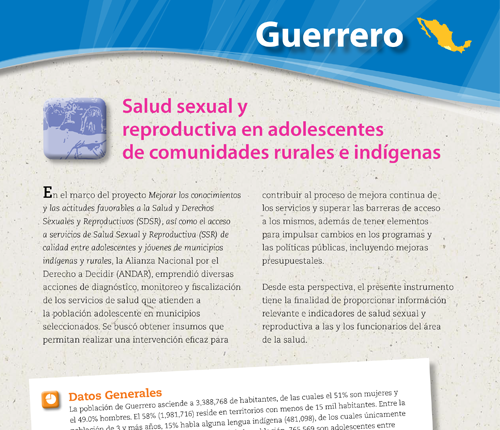
This is a fact sheet with statistical information on the sexual and reproductive health of adolescents in the Mexican state of Guerrero. It is meant to provide relevant information on sexual and reproductive health indicators to health and policy makers as well as recommendation for improving sexual and reproductive health services and access.