


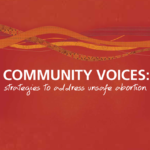
This booklet describes Ipas’s community work with vivid stories and narrative from Ipas staff and partners in the field—from Ethiopia to Mexico.
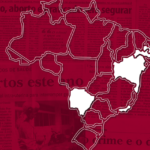
This document gives a summary analysis of primary and secondary data documenting unsafe abortion and the impact of the criminalization of abortion on women’s lives and health and on health services in 5 Brazilian states: Mato Grosso do Sul, Rio de Janeiro, Bahía, Pernambuco, and Paraíba.
This collection contains five independent self-reflection and sensitization activities on abortion, some of which have been adapted from widely used sexual and reproductive health and rights (SRHR) exercises. They are effective in helping young people reflect on their abortion-related feelings and experiences, as well as in preparing young audiences for further discussions, values clarification, and skills-building related to abortion. Each activity description includes information about objectives, materials needed, timeline and advance preparations. This publication accompanies Abortion care for young women: A training toolkit (ACYTK-E11).
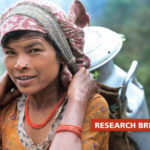
Since the liberalization of Nepal’s abortion law in 2002, intensive provider training and facility support have proven successful strategies for increasing the availability of comprehensive abortion care (CAC) services in the country. However, little is known about the pathways through which women access safe abortion services. This publication presents research on how women in Nepal access safe abortion information and services, including evidence-based recommendations indicating that increasing contraceptive education and access to female community health volunteers can improve women’s ability to manage their reproductive health.
Ending the silent pandemic of unsafe abortion is an urgent public-health and human-rights imperative. As with other more visible global-health issues, this scourge threatens women throughout the developing world. Every year, about 19–20 million abortions are done by individuals without the requisite skills, or in environments below minimum medical standards, or both.
This paper reports the results of an intervention with 3,471 abortion providers in India, Nepal and Nigeria. Following abortion care training, providers received in-person visits and virtual contacts by a clinical and programmatic support team for a 12-month period. The intervention also included technical assistance to and upgrades in facilities where the providers worked.
The Rohingya women and girls who have suffered sexual torture and humiliation and have now fled their homes most certainly deserve whatever care may alleviate some of their suffering. By not providing comprehensive reproductive health care, including contraception and safe abortion services, humanitarian agencies have taken a side, the side that opposes women’s human rights, the side that opposes science and common sense, the side that flies against established international agreements. Doing nothing speaks volumes.
This study aimed to support the development of a mobile phone intervention to support postmenstrual regulation family planning use in Bangladesh. It explored what family planning information women want to receive after having a menstrual regulation procedure, whether they would like to receive this information via their mobile phone, and if so, what their preferences are for the way in which it is delivered. Participatory interviews were conducted with 24 menstrual regulation clients in Dhaka and Sylhet divisions in Bangladesh.
This evaluation assesses the factors that influence contraceptive uptake among adolescents and young women seeking abortion care in health facilities. We analyzed client log book data from 921,918 abortion care cases in 4,881 health facilities in 10 countries from July 2011 through June 2015, and found that programmatic support to health systems, including provider training in contraceptive counseling and provision, was associated with women’s higher acceptance of postabortion contraception.
Numerous instances have been reported where women have been denied termination of pregnancy services for pregnancies arising out of rape, incest and sexual violence. There is also the rising issue of women and girls being forced by the police to keep the pregnancy in cases of incest or rape to preserve the infant to be used to retrieve DNA for evidence while prosecuting the perpetrator.
During last year’s national exams, media reported alarming cases of girls who sat the papers in delivery rooms or went into labour in the exam room. These statistics show the need for urgent action and awareness to enable the youth to manage their own sexual and reproductive health. Estimates from developing countries indicate that pregnancy and delivery complications, including unsafe abortions, are the second leading causes of death for girls below 20 years.
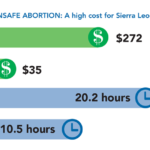
This fact sheet describes the impact of unsafe abortion in Sierra Leone as evidenced by three studies.
This is an advocacy tool for implementing authorities, service providers and NGOs on safe abortion and sex selection.
In 2021, the “Promotion of Proper Human Sexual Rights and Ghanaian Family Values Bill” was introduced in the Ghanaian Parliament. The bill, if passed, would criminalize LGBTI people and behavior, as well as those who support their rights, and even those who report on lesbian, gay, bisexual, transgender, and intersex (LGBTI) issues. While there has been significant national and international media coverage of the bill, what is less understood is who is driving promotion of the bill, and the accompanying harmful public debate. This report seeks to fill that knowledge gap, identifying who is behind the external anti-LGBTI influence, detailing connections between Ghanaian leaders and conservative foreign groups, and showing how anti-LGBTI rhetoric, and social and other media traffic, are being shaped and driven by these interests. As of March 2023, the anti-LGBTI bill is still pending in Ghanaian parliament. With this report, we provide recommendations to continue exposing the origins of anti-LGBTI hatred in Ghana and guidance on supporting LGBTI rights and reclaiming the narrative from homophobic politicians and other personalities to demonstrate that reactionary narratives against LGBTI rights are not universal in Ghana.
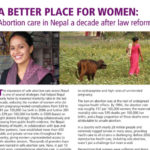
This publication highlights the work in Nepal since legal reform a decade ago and puts a spotlight on the key ingredients for successful scale-up of abortion care, including partnerships with government and NGOs and integration of abortion within the country’s Safe Motherhood program.
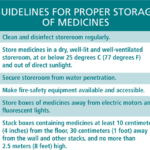
This 12-page job aid supports efficient inventory management of misoprostol (and mifepristone, depending on the setting) and other maternal-health medicines. It defines sound inventory management practices that can help reduce stock-outs and oversupply situations, and is for use by staff in public health facilities, nongovernmental organizations (civil society organizations) and private for-profit clinics and hospitals.