







Recent literature suggests that climate change can impact sexual and reproductive health and rights (SRHR) outcomes, especially since climate-related events may exacerbate persistent inequalities based on gender, disability status, sexual orientation, and age, among others. Climate change can also impact health infrastructure with an impact on SRHR access and outcomes. However, data are scarce when it comes to certain topical areas, types of evidence, and in using an intersectional approach. Based on a prior expert consultation exercise, we conducted a consensus and priority setting process to develop a list of priority research questions at the intersection of climate change and SRHR. For this, in 2024, we completed an iterative process over three rounds consisting of online surveys and consultations, following modified Delphi and Child Health and Nutrition Research Initiative (CHNRI) methodologies for which 100 people were included. For round one, 56 people responded to the 17-question survey framed around topical areas in SRHR, research methodologies, and intersectionality; 39 people participated in the online consultation. The round two survey had 36 respondents and 41 participants to the online consultation. The third round included a survey with a list of 31 questions that respondents were asked to prioritize. A final list of ten questions emerged which highlighted important areas where there continue to be gaps in evidence, including maternal and perinatal health, contraception and abortion access, and gender-based violence. Other critical areas include intersectional issues regarding gender and poverty and comprehensive sex education. The list can serve as a starting point to guide the SRHR research community to generate the evidence needed for policy action.
Democratic Republic of Congo: Safe abortion is a human right and must be treated as essential care for survivors of sexual violence without arbitrary time limits (Frontiers in Reproductive Health)
An analysis of how the Public Defender’s Office of the State of Rio de Janeiro has contributed, through public advocacy and the use of procedural paths, to overcoming barriers and implementing public health policies to guarantee access to legal abortion.
There are few studies in Brazil on the role of the Public Defender’s Office in achieving reproductive justice and, specifically, in guaranteeing the right to abortion. The institutional paths are tortuous for those who request the termination of pregnancy in health services, with several barriers to access to the procedure even within legal parameters. In a scenario of legal restrictions and human rights violations, the Public Defender’s Office acts as a mediator of demands with health services or through requests for judicial authorization from the courts. This article discusses pioneering actions and initiatives by the Public Defender’s Office of the State of Rio de Janeiro in recent years to guarantee legal access to abortion, against threats of regression in law and practice.
As the United States approaches its rescheduled 4th Universal Periodic Review (UPR), individuals’ sexual and reproductive health and rights continue to deteriorate across the country. Since our previous submission, there has been an increase in both restrictions on reproductive health-care access (in particular abortion care), and in targeted, state-sanctioned violence, intimidation, discrimination, and harassment of communities by U.S. Immigration and Customs Enforcement (ICE) and Customs and Border Protection (CBP).
Based on IDRC‑supported qualitative research conducted in Kinshasa, this policy brief examines how school environments shape the educational pathways of pregnant adolescent girls and unmarried young mothers. Despite recent policy reforms prohibiting their exclusion from schools, the findings reveal persistent stigma and systemic barriers. The brief calls for coordinated evidence‑informed action across education, health, and community systems to uphold girls’ right to education and advance gender equality.
This manual serves as a quick reference guide for pro-choice advocates. The guide offers factual evidence debunking ten widely disseminated abortion myths, and provides supporting background information and resources. We hope this guide will help reproductive rights activists to confidently respond to challenges to our work and to continue advocating for abortion based on clear, scientific and unbiased data.
This manual serves as a quick reference guide for pro-choice advocates. The guide offers factual evidence debunking ten widely disseminated abortion myths, and provides supporting background information and resources. We hope this guide will help reproductive rights activists to confidently respond to challenges to our work and to continue advocating for abortion based on clear, scientific and unbiased data.
In Central African Republic, women are arriving at hospitals with life-threatening abortion complications—too late for some, and almost all are preventable.
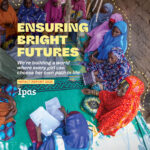

To address these gaps, the Thriving Pharmacies: Smart Business for Better Care training package was developed to strengthen the business acumen of community pharmacists and position family planning (FP), including post–MA FP, as both a vital health service and a sustainable business opportunity. The training package integrates entrepreneurship, financial management, and operational planning through practical, applied learning.

Presentation deck: Scaling medication abortion (MA) and post-MA contraception, meeting women where they are.
The report, Future-Proofing: The Professionalization of an Anti-Rights Youth Generation, examines the recruitment, funding, coordination, and mobilization of young people within anti-rights movements.
In Ghana, people who get abortion pills at pharmacies are just as likely to use contraception afterward as those who go to clinics.
Abortion rights in cases of stealthing: reflections, challenges and legal possibilities in Brazil: In 2025, Ipas-supported research in Brazil examined “stealthing,” removing a condom during sex without consent, and how it may fit within Brazilian law as a form of sexual violence with implications for legal abortion eligibility. This paper argues that pregnancies resulting from “stealthing” should qualify for legal abortion under existing exceptions for pregnancies resulting from rape.
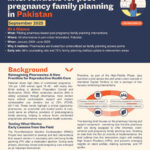
This PMAC learning brief examines the pharmacy training and support aspects of a pilot study in two peri-urban union councils in Islamabad Capital Territory. It highlights how frontline pharmacy staff are trained to provide informed, client-centered post-pregnancy family planning care. Drawing on data from the first six months of the study, the brief showcases how the intervention aligns with High Impact Practices (HIPs), offering insights into client profiles, training effectiveness, and family planning uptake.
Ipas’s SMA research in Cambodia and Ghana provides insights into women’s uptake of post-abortion contraception from pharmacists versus clinics. Results showed that although the rates of contraceptive use were the same between women who got abortion pills from a pharmacy versus a clinic, pharmacy clients were more likely to use a less effective method, and contraceptive information and options were more readily offered by clinics, indicating a need for supporting pharmacies in providing more information and effective methods at the time of SMA purchase.