







For women who want to end their pregnancies, laws that allow only medical doctors to provide abortion are real barriers. Abortion can safely be provided by nurses, midwives, paramedical personnel and other midlevel providers. Women who have correct information can take pills to end a pregnancy safely outside a health facility. However, many abortion laws require the involvement of one or more medical doctors. These laws criminalize women and other health professionals who end pregnancies safely without a doctor. Under doctor-only laws, health systems—particularly in the global south—cannot train enough abortion providers to make abortion accessible to all women. Doctor-only laws discriminate against women who belong to vulnerable and disadvantaged groups and who are least likely to have access to medical doctors. Lawmakers need not designate who can provide abortion in the law. Documents such as national health standards and guidelines are better suited to clarify who are authorized providers. This publication explains how Standards and Guidelines, enacted by the Ministry of Health and ideally updated every few years, can reflect the latest scientific evidence in abortion care.
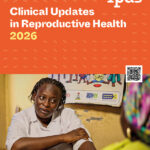
Clinical Updates in Reproductive Health (CURHs) are designed to provide Ipas staff, trainers, partners and other health-care providers with access to up-to-date, evidence-based recommendations. In general, the recommendations are the same as those in the World Health Organization’s 2022 Safe Abortion: Technical and Policy Guidance for Health Systems, Second edition. In rare cases, the recommendations have been modified due to the settings where we work. In addition, if there is more current evidence to inform the recommendations, they will be updated here. Please note: Clinical Updates in Reproductive Health provides Ipas’s most up-to-date clinical guidance. Recommendations in this publication supersede any clinical guidance in Ipas curricula that differs from the guidance provided here.
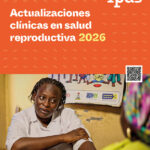
La publicación de Ipas titulada Actualizaciones clínicas en salud reproductiva contiene recomendaciones clínicas actualizadas, basadas en evidencia, sobre la atención integral del aborto, así como nuevos temas y recursos agregados con regularidad. Actualizaciones clínicas en salud reproductiva ofrece información concisa y fácil de leer sobre los servicios de aborto, y combina las evidencias más recientes con lecciones aprendidas de profesionales de la salud a nivel mundial para producir recomendaciones clínicas pertinentes.
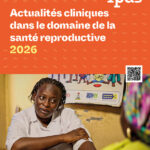
Actualités cliniques dans le domaine de la santé reproductive vise à permettre aux membres du personnel d’Ipas, aux formateurs, à nos partenaires et aux autres professionnels de santé d’avoir accès aux recommandations basées sur des éléments factuels les plus récentes.
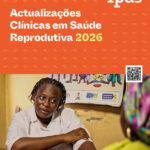
As Actualizações clínicas em saúde reprodutiva foram concebidas para fornecer ao pessoal do Ipas, formadores, parceiros e outros provedores de serviços de saúde acesso a recomendações actualizadas e baseadas na evidência. Em geral, as recomendações são as mesmas que aquelas na edição de 2012 do guia da Organização Mundial da Saúde titulado Abortamento seguro: orientação técnica e de políticas para sistemas de saúde, Segunda edição. Em casos excepcionais, as recomendações foram modificadas de acordo com os contextos em que trabalhamos. Além disso, se houver evidência mais actualizada para informar as recomendações, estas serão actualizadas aqui.
Recent literature suggests that climate change can impact sexual and reproductive health and rights (SRHR) outcomes, especially since climate-related events may exacerbate persistent inequalities based on gender, disability status, sexual orientation, and age, among others. Climate change can also impact health infrastructure with an impact on SRHR access and outcomes. However, data are scarce when it comes to certain topical areas, types of evidence, and in using an intersectional approach. Based on a prior expert consultation exercise, we conducted a consensus and priority setting process to develop a list of priority research questions at the intersection of climate change and SRHR. For this, in 2024, we completed an iterative process over three rounds consisting of online surveys and consultations, following modified Delphi and Child Health and Nutrition Research Initiative (CHNRI) methodologies for which 100 people were included. For round one, 56 people responded to the 17-question survey framed around topical areas in SRHR, research methodologies, and intersectionality; 39 people participated in the online consultation. The round two survey had 36 respondents and 41 participants to the online consultation. The third round included a survey with a list of 31 questions that respondents were asked to prioritize. A final list of ten questions emerged which highlighted important areas where there continue to be gaps in evidence, including maternal and perinatal health, contraception and abortion access, and gender-based violence. Other critical areas include intersectional issues regarding gender and poverty and comprehensive sex education. The list can serve as a starting point to guide the SRHR research community to generate the evidence needed for policy action.
The report, Future-Proofing: The Professionalization of an Anti-Rights Youth Generation, examines the recruitment, funding, coordination, and mobilization of young people within anti-rights movements.

This publication offers a new definition of sexual and reproductive wellbeing and a short measure to assess it, shifting attention toward whether people are able to live the sexual and reproductive lives they want, not just whether services were delivered.
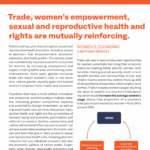
This brief highlights how international, more open, gender-inclusive trade can boost women’s role in the economy, can reduce gender equality gaps, and can expand women’s empower, health and education—and how trade, women’s empowerment and sexual and reproductive health and rights are mutually reinforcing.

The Abortion Knowledge, Attitudes, Practices, and Intentions (KAPI) Survey with optional add-on supplements, developed by Ipas, is a comprehensive resource designed to assess and enhance community understanding, attitudes and support around abortion care.
The Received Social Support Scale (R3S) is a 9-item tool designed to measure social support received by people seeking abortion care.
This executive summary provides an overview of findings from a forthcoming 2024 report, Mission Creep: Expanding Attacks on Gender Threaten the United Nations. It provides key findings and recommendations as to how feminist activists, government representatives, and UN officials can prepare an intersectional human rights response that is cross-cutting, bold, and prepared to defend the universality of human rights.
On November 17, 2023, the United Nation’s New York City headquarters will host a gathering of the Political Network for Values (PNfV), a major organizing nexus for the global far-right. Founded almost a decade ago, the benignly named PNfV has largely flown under the radar. In this time, the group has blossomed into a key networking hub and training ground for far-right activists and political leaders seeking to diminish or extinguish minorities rights and depreciate multilateral human rights systems—including the United Nations itself.
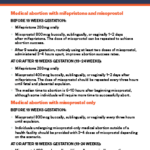
This dosage card serves as a quick reference guide for health-care providers who are administering medical abortion.
This report aims to shed light on FWI, a group that peddles disinformation and homophobia that is impacting health, education, and human rights policy from Arizona to East Africa and in multilateral spaces like the United Nations.