







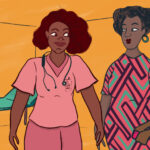
This Ipas study shares the real stories of 313 adolescents in Africa navigating abortion care amid fear, stigma, and limited support.
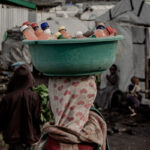
Despite logistical, political and humanitarian obstacles, Ipas DRC has continued showing up for women and girls. We have doubled our efforts to continue providing essential sexual and reproductive health services where they are most needed.

The authors propose improved survey questions about when and how people realize they are pregnant, including response options that capture physical signs, practical constraints, and emotional factors. Better measurement of pregnancy recognition can help explain why people seek care when they do, including abortion care.
Using data from Cambodia and Ghana, Ipas authors compare the SMA information and counseling provided by pharmacists to women with that provided by a health provider at a clinic. While pharmacists and clinic-based providers focused on different aspects of SMA counseling, results indicate that both cadres would benefit from training to ensure their clients receive the best information and counseling possible.
This publication documents the journey of the Sexual and Reproductive Health and Rights and Climate Justice Coalition, co-founded by Ipas. The coalition connects more than 100 organizations working to build evidence, challenge harmful narratives, and champion locally led solutions rooted in autonomy and rights.
In Nepal, research explored how repeated climate disasters are linked to changes in women’s safety and daily lives, including increased risk of gender-based violence, but also greater autonomy in decision-making as men migrate for work.
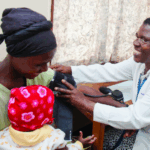
Led by researchers from Ipas, Uganda’s Ministry of Health, and the ACTUATE project at DKT International, this study looks at how people across nine Ugandan districts experience abortion and postabortion care in public health facilities.
Enabling civil society organizations (CSOs) in sub-Saharan Africa to develop research ensures equitable scholarly representation and addresses local problems in sexual and reproductive health. To this end, a transnational research collaboration was formed to evaluate abortion services and develop the research capacity of two CSOs in the Democratic Republic of Congo (DRC). The team included Karolinska Institutet, Partners for Reproductive Justice (IPAS) and the National Midwives’ Association (SCOSAF). The objective of this article is to discuss the context of the partnership, including research capacity-building inputs, processes, outputs, and outcomes, as well as lessons learned and recommendations. Activities were tailored to the research capacities of each CSO and the research team of clinical care providers over the two-year project period. Research capacity-building resulted in increased opportunities for team members to conduct research and manage research projects outside of academia. Overall, there were improvements in midwives’ capacity to design and conduct research, and in the midwives’ association’s capacity for research management and project administration. Recommendations for others include pragmatic incorporation of gender considerations, approaches to organizational and individual research capacity-building, and baseline CSO capacity assessments for research management. Health research conducted in a non-academic setting, specifically within CSOs, can be a pathway to research equity. In DRC, it strengthened health professionals in their capacity to generate evidence to influence local abortion policy and health services in Kinshasa, DRC.
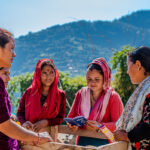
In rural Nepal, women’s lives have often been restricted by silence and unspoken rules. From menstruation taboos to misinformation on family planning and abortion, many young women are taught to accept harmful practices as normal. For years, Himali Khatri did too. “I am almost 40 years old, and until now, I have never received such knowledge about reproductive health,” she says.
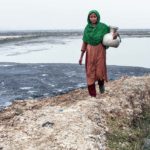
A qualitative study by Ipas Bangladesh reveals how extreme weather events (EWEs) caused by climate change worsen sexual and reproductive health and rights (SRHR) outcomes for women and girls in coastal Bangladesh.