







Clinical updates in reproductive health
Clinical Updates in Reproductive Health (CURHs) are designed to provide Ipas staff, trainers, partners and other health-care providers with access to up-to-date, evidence-based recommendations. In general, the recommendations are the same as those in the World Health Organization’s 2022 Safe Abortion: Technical and Policy Guidance for Health Systems, Second edition. In rare cases, the recommendations have been modified due to the settings where we work. In addition, if there is more current evidence to inform the recommendations, they will be updated here. Please note: Clinical Updates in Reproductive Health provides Ipas’s most up-to-date clinical guidance. Recommendations in this publication supersede any clinical guidance in Ipas curricula that differs from the guidance provided here.
Actualizaciones clínicas en salud reproductiva
La publicación de Ipas titulada Actualizaciones clínicas en salud reproductiva contiene recomendaciones clínicas actualizadas, basadas en evidencia, sobre la atención integral del aborto, así como nuevos temas y recursos agregados con regularidad. Actualizaciones clínicas en salud reproductiva ofrece información concisa y fácil de leer sobre los servicios de aborto, y combina las evidencias más recientes con lecciones aprendidas de profesionales de la salud a nivel mundial para producir recomendaciones clínicas pertinentes.
Actualités cliniques dans le domaine de la santé reproductive
Actualités cliniques dans le domaine de la santé reproductive vise à permettre aux membres du personnel d’Ipas, aux formateurs, à nos partenaires et aux autres professionnels de santé d’avoir accès aux recommandations basées sur des éléments factuels les plus récentes.
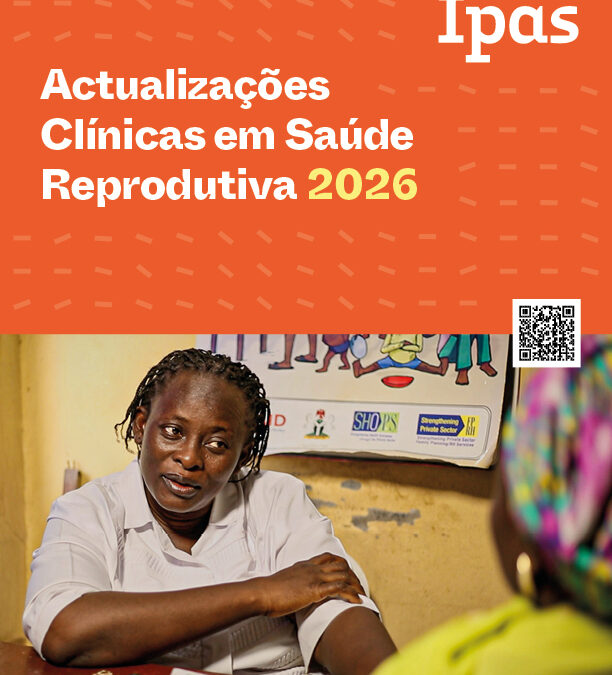
Actualizações clínicas em saúde reprodutiva
As Actualizações clínicas em saúde reprodutiva foram concebidas para fornecer ao pessoal do Ipas, formadores, parceiros e outros provedores de serviços de saúde acesso a recomendações actualizadas e baseadas na evidência. Em geral, as recomendações são as mesmas que aquelas na edição de 2012 do guia da Organização Mundial da Saúde titulado Abortamento seguro: orientação técnica e de políticas para sistemas de saúde, Segunda edição. Em casos excepcionais, as recomendações foram modificadas de acordo com os contextos em que trabalhamos. Além disso, se houver evidência mais actualizada para informar as recomendações, estas serão actualizadas aqui.