





Sayo Stephannie Esther
We resist to exist: An East African queer resilience story
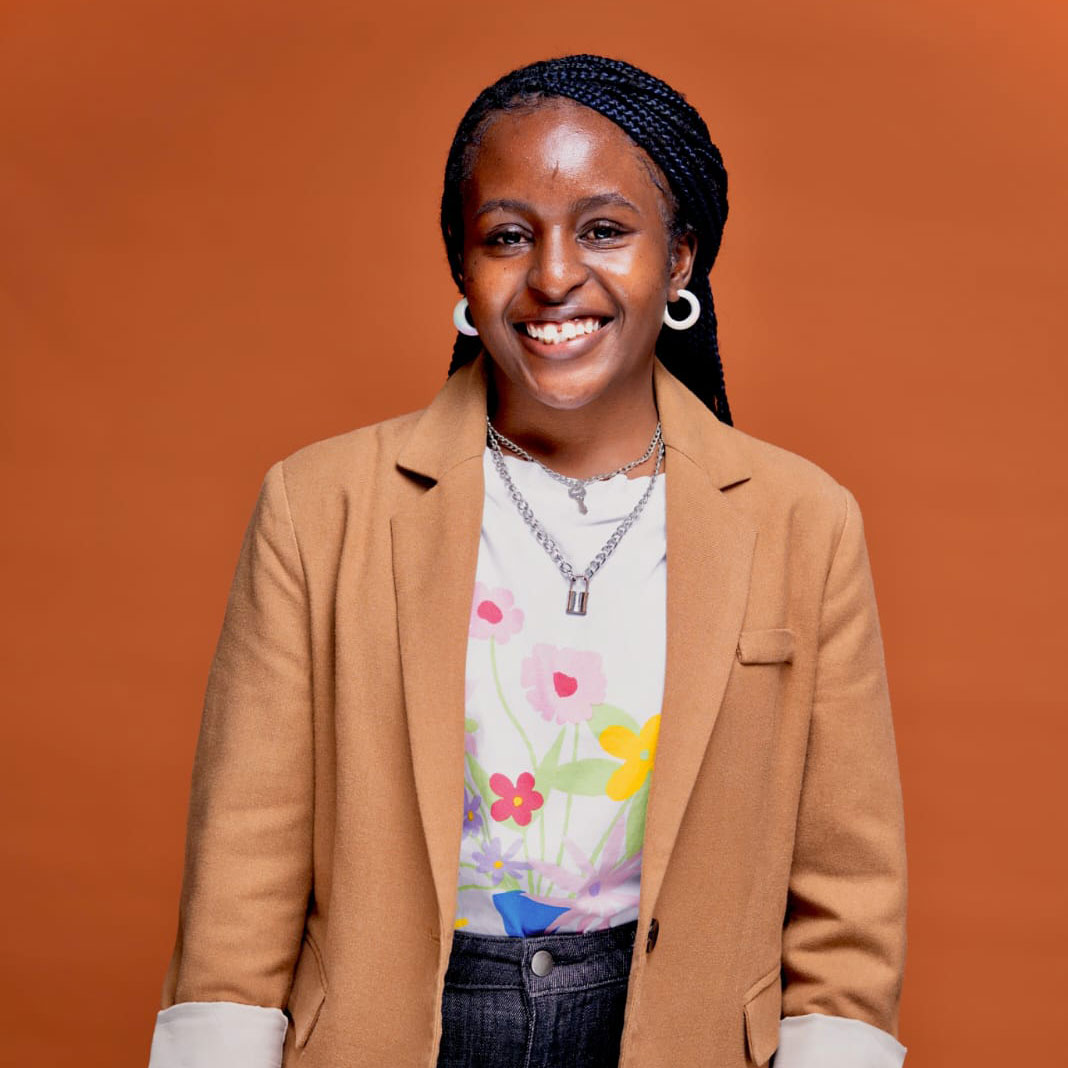
Sayo is a Kenyan lawyer, queer activist, award-winning essayist, and intersectional youth feminist. She is an Emerging Leader with Women Deliver, where she currently leads a grant-funded project in Nairobi. She has a keen interest in the rights of women and girls, with a special focus on the LGBTQIA+ community. She is skilled in youth-led engagements, sexual and reproductive health and rights (SRHR), human rights, and climate justice, as well as championing the UN Sustainable Development Goals (SDGs). Moreover, she is part of the UN Women’s Adolescent and Youth Steering Committee, the Women’s Rights and LBTI Caucuses, all of which are instrumental in civil society participation annually, at the Commission on the Status of Women (CSW). In this essay, she explores resilience through her lens as a queer activist and feminist.
My resilience looks like a blank page jotted on with invisible ink—the endless possibility of ineffable words that bleed through every line with valor, grace, and ruthlessness. My resilience is loud, yet ever so quiet in the very places that are blind to my existence. Where the elephant in the room remains unseen, unheard, and unacknowledged. As a queer Kenyan woman working in the advocacy and legal sector, resilience is deeply ingrained in my day-to-day life. While that may sound like normalcy, it shouldn’t be construed as such.
I recall recently an encounter I had with a law school classmate when he “caught” me reading Audre Lorde’s Sister Outsider. After prying the paperback off my hands, he proceeded to read aloud the book’s blurb. The very first sentence contained “black lesbian poet” in it, and that’s when I rued carrying the book to school that day. Although I remain unafraid to be my true self in certain spaces, that experience made me feel cornered. I was battling with thoughts and words, trying to overcompensate for the shame written all over my face. Suddenly, the space was unsafe, and I felt judged. This is sadly what “normalcy” looks like, concealing queer literature and evading topics on sexuality.
Resilience has presented itself through the many phases of the nearly two and a half decades of my life. I have known pain, grief, joy, success, and everything in between. As a middle child and firstborn daughter in a family of seven, I learned to embrace resilience and become adaptable to a plethora of experiences. For one, my parents separated and were estranged for the better part of my undergraduate degree. Further, constantly being miles away from home(s) during my twenties allowed me to master the true art of independence, self-support, and relying on myself to keep my head above water.
During that time, I did not fully process my parents’ irretrievable marital breakdown. I remember confiding in my lecturer, who told me that sometimes it is best to look at parenting through a different lens. She admitted that navigating everything may be hard, but at least my parents were separately and individually at peace in their own right. I came to the stark conclusion that, although everything happened so unexpectedly, it was an impending inevitability. For almost three decades of their union, they had a good run, but eventually, as fate would have it, everything fell apart. Whilst I cannot relate to cisgender-heteronormative experiences (straight relationships), I witnessed my parents’ love and growth in their partnership. I will therefore hold lessons and forever cherish memories from the same.
The beginning of my “becoming” story
Fast forward to my acceptance of the situation back at home, and school certainly supported my well-being and sanity. The faculty of law at my alma mater was quite close-knit; we all knew each other, especially among the student fraternity. My passion for human rights and social justice was born through coursework, extracurricular activities, student leadership, and legal aid clinics. Through these experiences, I was also able to build a community around school and became more open to advocating for the rights of sexual and gender minorities. At the time, I would say it was the beginning of my “becoming” story.

As a queer Kenyan woman working in the advocacy and legal sector, resilience is deeply ingrained in my day-to-day life. While that may sound like normalcy, it shouldn’t be construed as such.
In early 2022, something traumatic happened to me alongside my then-partner, and it remains the truest test of my resilience. I was still pursuing my undergraduate law degree at my alma mater, and we were out with a group of mutual friends for a night of post-semester celebrations outside of campus. The evening was off to a wonderful start until around midnight, when a goliath of a man who doubled as the club’s bouncer singled us out within the friend group. And in true predatory fashion, he waited until the opportune time to strike. At our most vulnerable, when we had taken a bathroom break, Goliath showed up and yanked us out of the stalls.
He proceeded to march us into an isolated area within the club’s premises and held us hostage for almost two hours, which felt like an eternity. Goliath did not flinch while he was sharing his homophobic views with us. According to him, my partner and I were an abomination, satanic, and a disgrace to nature. He threatened us with calling the cops on us and doing all manner of vile things to “turn” us straight. He then shamelessly proceeded to suggest that corrective rape should do the trick.
As I sat there, clutching my partner’s hand, I was ineffably terrified. I thought, “This must surely be the end!” And it actually was. It was the finality of the queer bubble that, over time, gives one a false sense of safety and presumed security. Somehow, despite the horror stories you hear about attacks on queer individuals, nothing ever prepares you for that exact moment, when all you have is one of two options: being coerced into rape or getting arrested and eventually sentenced to 14 years to life in prison.
I wish I could say that the incident was not life-threatening, especially because we managed to get out unscathed. Rarely do we as the LGBTQIA+ community make it out, and I always think back to how things could have turned out differently. As we walked back to the hostels the following morning, in the company of our friends who had come to our rescue, I realized that the queer bubble had certainly been ripped open. It was certainly an unfortunate epiphany that rewired my perception of what homophobia and violence against the queer community look like.
From then on, I learned how to hide integral parts of myself from the public and even my family, from time to time. It is not a reality I wish to relive for the rest of my life, but for now, survival supersedes all potential ideals. It is what continues to keep me safe. However, walking the streets of Nairobi with my non-binary partner while looking over our shoulders and fearing the worst should not be normalized. We, as queer people, deserve far better.
He threatened us with calling the cops on us and doing all manner of vile things to "turn" us straight.
The silver lining
Looking back, I wish I could go back and erase my traumatic experience, but the silver lining was being able to speak and write my truth. Two weeks after going through the life-threatening ordeal, I wrote and submitted an essay entry for KELIN Kenya’s Bodily Autonomy and Integrity Essay Writing Competition. This was me, finally taking back my power, and as I jotted down my frustrations, it was more than just a release. Soon after, I received an email informing me of the status of my submission—I had won first prize for best overall essay and was awarded KES 50,000 (386 USD) for my work. This incredible milestone was my official debut in civil society advocacy. In retrospect, it was that moment that created a chain reaction leading to exactly where I stand today.
Around the same period, I recall reading in the news about the story of Sheila Lumumba, a non-binary lesbian who was raped and brutally murdered in Karatina, Nyeri County, Kenya. Another victim of “corrective” rape and violence, only this time, they succumbed to the crimes committed against them. When their story broke, the nation was at a standstill. Public scrutiny of femicide was making rounds on social media, with many justifying the violent crime because of the victim’s sexual orientation. This was a wake-up call for me as part of the queer organizing community. The fight to end femicide in Kenya has seen a lot of powerful queer women and allies step up, such as the impeccable Gen Z activist Zaha Speaks from #endfemicideKE, which organizes nationwide marches to eradicate femicide and violence against women and girls.
The powerhouse Njeri Migwi, the founder of Usikimye and an ally for queer rights, has done tremendous work in the fight to end SGBV and femicide. We have also seen queer organizations like the National Gay and Lesbian Human Rights Commission (NGLHRC) taking up Sheila’s and others’ cases and representing minority groups in court. More recently, “MASKAN”, the first ever art installation on femicide by the Creatives Garage, a premiere queer-owned creative arts initiative in Nairobi, Kenya.
Borrowing lessons and practices from such powerful feminists, I was able to combat sexual and gender-based violence (SGBV) and femicide in my own right in the 2024 16 Days of Activism on Ending Violence Against Women and Girls (EVAWG). I organized an online campaign via social media and participated in various webinars and convenings. One of the highlights of the campaign was when one of my former college mates decided to raise awareness on intimate partner violence after being inspired by my campaign. She tagged me on her posts and made a testament on how the campaign truly impacted her advocacy. This melted my heart and reminded me that I do not walk this path alone and that impact goes beyond just numbers and becomes more personalized. Inasmuch as I garnered thousands of interactions during the campaign, it’s the seemingly subtle moments that truly spark something even greater.
This was me, finally taking back my power, and as I jotted down my frustrations, it was more than just a release.
I’m grateful that my voice has not faltered
As I type out my experiences for this piece, I am grateful that my voice has not faltered. My advocacy for the rights of my community is deeply rooted in real lived experiences and the ways those experiences are, in turn, expressed. This is not a job but a calling, one that is unapologetic and unafraid despite the torment. The very ambit of my journey, which started almost half a decade ago, was deeply inspired by the experiences I had on campus. I recall fondly the milestone I achieved through submitting my dissertation on the rights of intersex children in Kenya— the impact of which traversed my career trajectory post-graduation.
Sexual and reproductive health and rights sit at the apex of my advocacy. As a lawyer, intersectional feminist, and emerging leader with Women Deliver, among other hats I adorn, resilience remains the connecting tissue. Through the organization, I got to attend the Commission on the Status of Women conference in early 2025 in New York. Through this opportunity, and it being my very first time traveling by flight and outside my continent, I was able to speak and connect with a global audience and find community far away from home. Adversely, given the geographical location, the UN Headquarters, I also grew more aware of the current geopolitical divide. Feminist and queer rights advocacy faces multiple crises driven by fascist regimes and humanitarian decline, especially in vulnerable contexts. Rollback on funding and investment in resourcing impacts queer communities beyond our already sparse representation, visibility, and justice.
Countering anti-rights movements and actors is a direct form of resilience in today’s global political landscape. I have seen these groups work to dismantle universally recognized rights for all, arguing that a select group—mostly women—should be denied rights to their autonomy and agency. In mid 2025, the infamous Pan-African Conference was held in Nairobi to elevate anti-gender rhetoric and claim “African family values”. From a queer perspective, the conference also managed to fuel the hate, stigma, and discrimination against the LGBTQIA+ community, ultimately endorsing the defunding of essential sexual and reproductive healthcare and psychosocial support for various groups.
Their appropriation of human rights language in international forums grants them an entry point to leverage ‘equal and opposite reaction’ damage to LGBTQIA+ rights development. Legislation is largely weaponized to appeal to the majority of their supporters. As I write this, a Kenyan politician is pushing for a bill before the Parliament targeting sexual and gender minorities and promoting harm against our community. Geopolitically, Kenya lies in a precarious position, surrounded by three neighboring East African countries rated among the top-most unsafe places for queer and gender-diverse individuals. Uganda is high up the list, with Tanzania slightly below, followed by Somalia. We therefore remain in such a fickle position that can otherwise result in “off with their queer heads!” state-sanctioned attacks.
Every day is a challenging one to exist in queerness and the so-called “un-African” or “westernized” construct. Social media platforms propagate misinformation and homophobic rhetoric against my community. Homosexuality is dubbed “unnatural” and a “sin” based on religious, cultural, and social norms. I once got a “why are you gay?” comment on my WhatsApp from someone who “freely” chose to share their homophobic views anonymously. The phrase used is well known in East Africa, as it was quoted from an infamous Ugandan interview where a TV reporter posed the question to a queer rights activist while on a local media station. From then on, media frenzy around the interview sparked memes and trends that are, to date, commonly used to bully queer individuals online and violate our digital rights and safety.
Every day is a challenging one to exist in queerness and the so-called ‘un-African’ or ‘westernized’ construct.
I choose to be bold and hopeful
Sexual and gender-based violence coupled with homophobia, transphobia, and all manner of acts of hate and discrimination, riddles the queer community in Kenya, as is the case with many other countries around the world. Visibility and representation sadly remain a privilege afforded to a few with status and palatability to the public’s notion of “acceptable”. Cis-heteronormativity and compulsory sexuality are enforced through discriminatory laws and practices and continue to justify human rights violations and abuses coupled with homophobia, transphobia, and all manner of acts of hate and discrimination, riddles the queer community in Kenya, as is the case with many other countries around the world. Visibility and representation sadly remain a privilege afforded to a few with status and palatability to the public’s notion of “acceptable”. Cis-heteronormativity and compulsory sexuality are enforced through discriminatory laws and practices and continue to justify human rights violations and abuses.
Currently, hosting a queer organizing event involves seemingly iron-clad security protocols, including withholding venue details from attendees until background checks are completed. Although pragmatic, this approach is not sustainable in the long run. As queer advocacy spaces and resources continue to shrink, our collective spirit becomes diminished. We are slowly being erased, and yet ironically, there remains no concrete data to back up our existence and history. While the likes of Sylvia Tamale and Kevin Mwachiro have done impeccable literary works in documenting our diverse experiences as African LGBTQIA+ communities, we still have a long way to go in achieving true liberation.
Universally fundamental human rights for all are constantly pitted against the concept of cultural relativism, which appeals to most African audiences, amid movements to decolonize foreign aid and neo-colonialism. Cultural relativism asserts that human rights laws should be determined by local cultural normative rules. This rationale is used to justify the denial of rights of minorities and underrepresented communities because they do not politically fit into the mold of majority representation or visibility of a nation.
In Kenya, normative expectations often dictate how sexual and gender minority resilience and justice are experienced. Resilience, as a feature of queer existence, requires a practical reckoning with those societal norms. Ultimately, queer rage is worn like a second skin, and mentally, we are constantly battling with our reality. For me, the work within the community sometimes translates into avoidance and deflection. Focusing on everyone else’s rights being violated, often forgetting to introspect on my very own.
As I look ahead, having acknowledged the lessons from the past, I see hope. I hope for a future where my existence and that of my community are no longer questioned. Where data and evidence of our trials and tribulations are accurately documented, allowing for full and absolute reforms and reparations. A world where to be queer is to be human, and coexistence does not depend on allyship or queer-adjacent collaboration. While this may sound overly optimistic, it reflects the fundamental elements of humanity—love, kindness, and community. When the hate so often directed at those who are ‘different’ eclipses that basic humanity, we all should possess.
It is in these very settings that I choose to be bold and face adversity head-on. For without resilience, my community ceases to exist. I cease to exist!
Ultimately, queer rage is worn like a second skin, and mentally, we are constantly battling with our reality.
Together, we’ll keep moving forward.