



In Ethiopia, a pilot study on SMA through private pharmacies demonstrates high demand from women and interest from pharmacies in providing women with medication abortion, but Ethiopia’s legal framework presents challenges to a pharmacy-based model.
In forcibly displaced populations, a new study protocol outlines a community-facility capture-recapture approach to better estimate maternal deaths due to abortion complications, helping strengthen measurement where official data is incomplete.

In the Democratic Republic of Congo, research shows that misoprostol was available in less than 50% of pharmacies and mifepristone and misoprostol in less than 2% of surveyed sites. Mystery client interactions reveal that most pharmacists need training on medication abortion counseling and regimens.
In India, a trend analysis shows a substantial increase in self-managed abortion (SMA) with pills between 2014 and 2021 and demonstrates the transformative power of SMA in increasing access to safe and effective abortion.
In Cambodia, an exploration of women’s SMA experiences reveals that young women’s success rates were comparable to those of adult women, and they generally had better experiences than their older counterparts. Young women were more likely to seek support from family and friends, highlighting the important role of social support and the need for accurate information on abortion to be disseminated at the community level.
Using data from the National Survey of Family Growth in the United States, researchers examined how state-level immigration policies are associated with effective contraceptive method use among US-born and foreign-born Mexican-origin women. Results reveal how exclusionary immigration policies are associated with lower contraceptive use among US- and foreign-born Mexican women.
In Mexico, most patients who have a facility-based abortion have no complications, but those that do experience a complication are more likely to come from a marginalized area and be seeking care later in pregnancy. This research uncovers the challenges associated with abortion care-seeking in Mexico, highlighting how location and timing contribute to the safety of abortion care received.


This manual serves as a quick reference guide for pro-choice advocates. The guide offers factual evidence debunking ten widely disseminated abortion myths, and provides supporting background information and resources. We hope this guide will help reproductive rights activists to confidently respond to challenges to our work and to continue advocating for abortion based on clear, scientific and unbiased data.
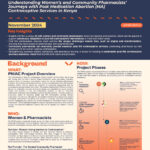
These learning briefs – a project anchor brief, a user-focused brief, and a pharmacist-focused brief – summarize lessons learned by the PMAC project during multiple phases of the project.
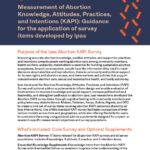
The Abortion Knowledge, Attitudes, Practices, and Intentions (KAPI) Survey with optional add-on supplements, developed by Ipas, is a comprehensive resource designed to assess and enhance community understanding, attitudes and support around abortion care.
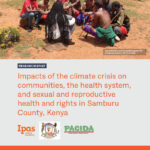
Our research shows how people and the health system in Samburu County, Kenya, are impacted in numerous ways by the climate crisis—and articulates how healthy people and communities are more resilient to the impacts of climate change.
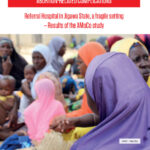
This manual serves as a quick reference guide for pro-choice advocates. The guide offers factual evidence debunking ten widely disseminated abortion myths, and provides supporting background information and resources. We hope this guide will help reproductive rights activists to confidently respond to challenges to our work and to continue advocating for abortion based on clear, scientific and unbiased data.

This report focuses on the damage Project 2025 would have on overseas development assistance and international cooperation.
These two learning products – a project brief and a technical brief – describe the Ipas Development Foundation’s work to increase contraceptive uptake and continuation after self-managed medical abortion.
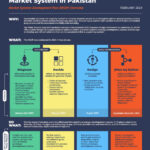
These three learning products — a market systems development plan (MSDP) overview, a workshop event summary, and a low fidelity process infographic — document our project’s efforts to understand, describe, and enhance the post-medication abortion contraceptive market in Pakistan
The Received Social Support Scale (R3S) is a 9-item tool designed to measure social support received by people seeking abortion care.