






How Ipas’s Makoki ya Mwasi project guarantees women displaced by conflict can still control their own bodies and futures
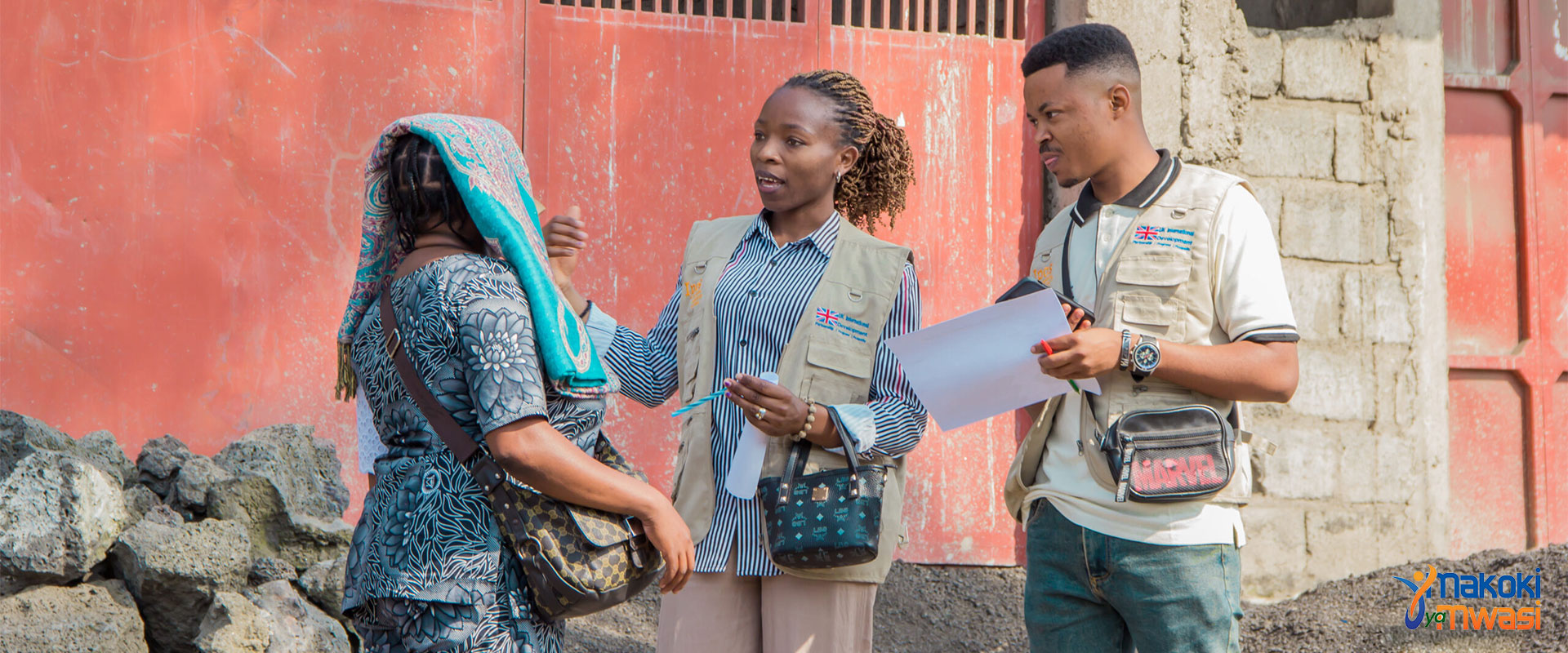
Ipas’s community partner Youth Alliance for Reproductive Health collected this story during a recent field visit to Beni in northeastern Democratic Republic of Congo. The visit documented the impact of the Makoki Ya Mwasi project, funded by the Swedish International Development Cooperation Agency. Amani* agreed to share her story to amplify the voices of women directly impacted by our project.
*Name changed to protect privacy
“I could care for my children without constantly fearing another pregnancy while we were already struggling.”
Like millions of displaced people forced to flee violence in eastern Democratic Republic of Congo (DRC), Amani’s* life is shaped by uncertainty, limited resources, and the daily challenge of keeping her children safe and healthy.
“Life in the camp is extremely hard. Some days, I don’t know what my children will eat tomorrow. Every day is about survival,” explains the 32-year-old mother of five.
She lives in the Alpha displacement camp in Beni, North Kivu, where access to basic services is fragile and daily survival takes priority. The prospect of another pregnancy became a source of deep concern for her. With food scarce and health services difficult to access, Amani questioned how she could protect her health while continuing to care for her children. In displacement, decisions about one’s body are too often shaped by circumstance rather than by choice.
A shift begins inside the camp
A turning point came when Amani connected with Mashujaa—a community‑based network of Ipas-trained volunteers who support women and girls with information, accompaniment, and referrals on sexual and reproductive health and rights.
After connecting with the Mashujaa network, she learned that access to family planning is a right—not a privilege limited to stable settings. She began to see it as essential to her health, autonomy, and family’s well‑being, especially in situations of displacement and crisis.
Mashujaa provided Amani with the accurate information and supportive guidance she needed to seek care.

“Life in the camp is extremely hard. Some days, I don’t know what my children will eat tomorrow. Every day is about survival”
Accessing care on her own terms
Amani visited the Butsili Health Center, where health providers had received special training in sexual and reproductive health care from the Ministry of Health, in collaboration with Ipas. She received care grounded in respect, confidentiality, and informed choice. Together with the provider, she discussed options and selected a family planning method aligned with her needs and decisions.
“I felt relieved,” she says. “I could care for my children without constantly fearing another pregnancy while we were already struggling.”
For Amani, this access went far beyond clinical service. It represented a step toward reclaiming control over her body and her future in a context where so much felt uncertain. With her health needs addressed, she could now focus on what mattered most: caring for her children and moving forward with greater peace of mind.
“I felt relieved,” she says. “I could care for my children without constantly fearing another pregnancy while we were already struggling.”
Acting where needs are most urgent
Amani’s experience reflects the broader impact sought by Ipas, whose work here focuses on addressing inequities in access to sexual and reproductive health care across the Democratic Republic of Congo—particularly for women and girls living in crisis‑affected and highly vulnerable settings.
This work is part of the Makoki ya Mwasi project, led by Ipas DRC with support from the Swedish International Development Cooperation Agency.
The project aims to ensure that women and girls—including those living in the most fragile and humanitarian contexts—can access reliable information and high‑quality sexual and reproductive health services,” says Dr. Celestine Buyibuyi, Ipas DRC’s humanitarian program advisor. “It also contributes to reducing gender‑based violence and unintended pregnancies by placing women’s rights, choices, and dignity at the center of all interventions.”
In North and South Kivu, Kasaï, and Kinshasa, the project takes a comprehensive approach by:
1
Strengthening community‑based actors, such as Mashujaa, to share accurate information and challenge stigma and harmful norms;
2
Expanding access to family planning and reproductive health services, including in humanitarian settings;
3
Supporting local health facilities to provide respectful, rights‑based, and client‑centered care.
Through this integrated approach, Ipas DRC has supported thousands of women and girls to make informed decisions about their sexual and reproductive health, with meaningful changes observed at both individual and community levels.
Restoring agency, even in times of crisis
In the Alpha displacement camp in Beni, North Kivu—as in many crisis‑affected communities across eastern DRC—Ipas demonstrates that rights‑based sexual and reproductive health care is both possible and essential, even in contexts of instability and emergency.
For Amani, this support has meant one clear and powerful outcome: the ability to decide about her own body, despite displacement and hardship. A decision that allows her to look ahead with renewed confidence for herself and her children.