







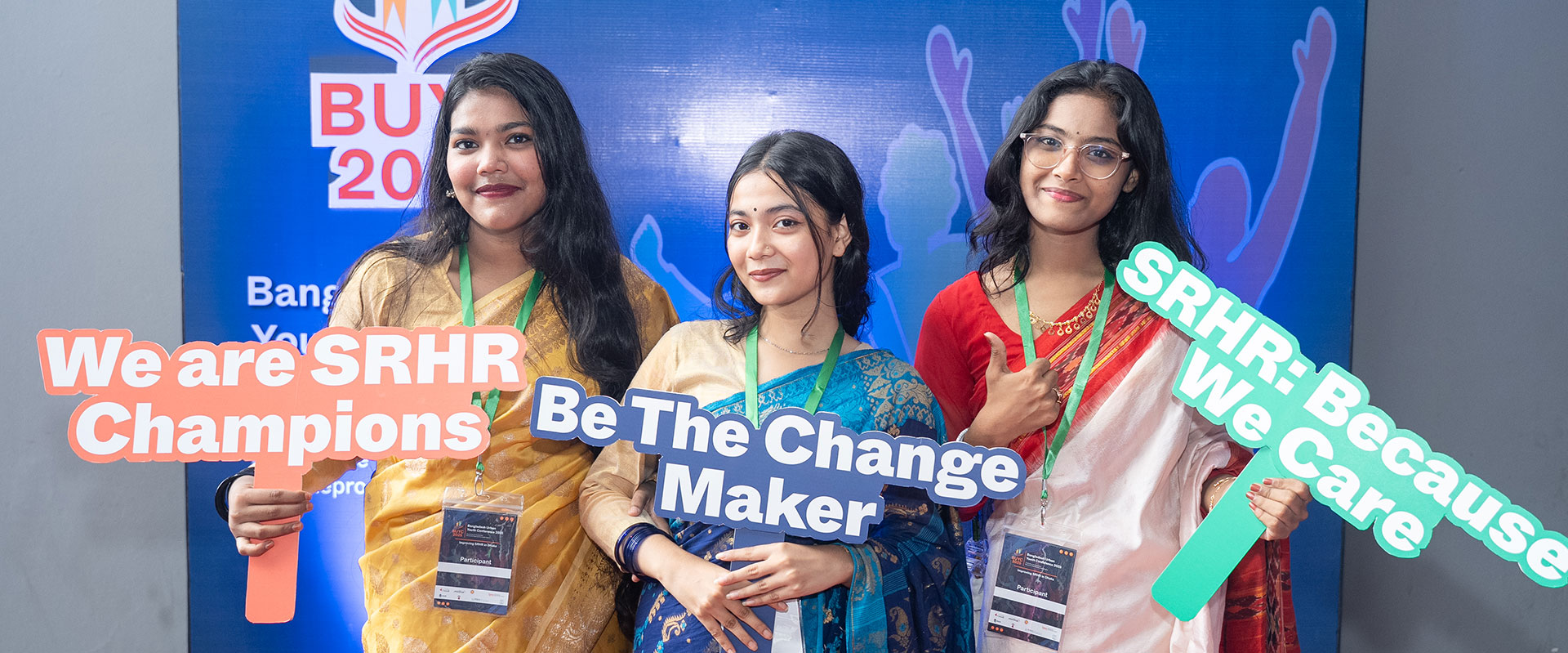
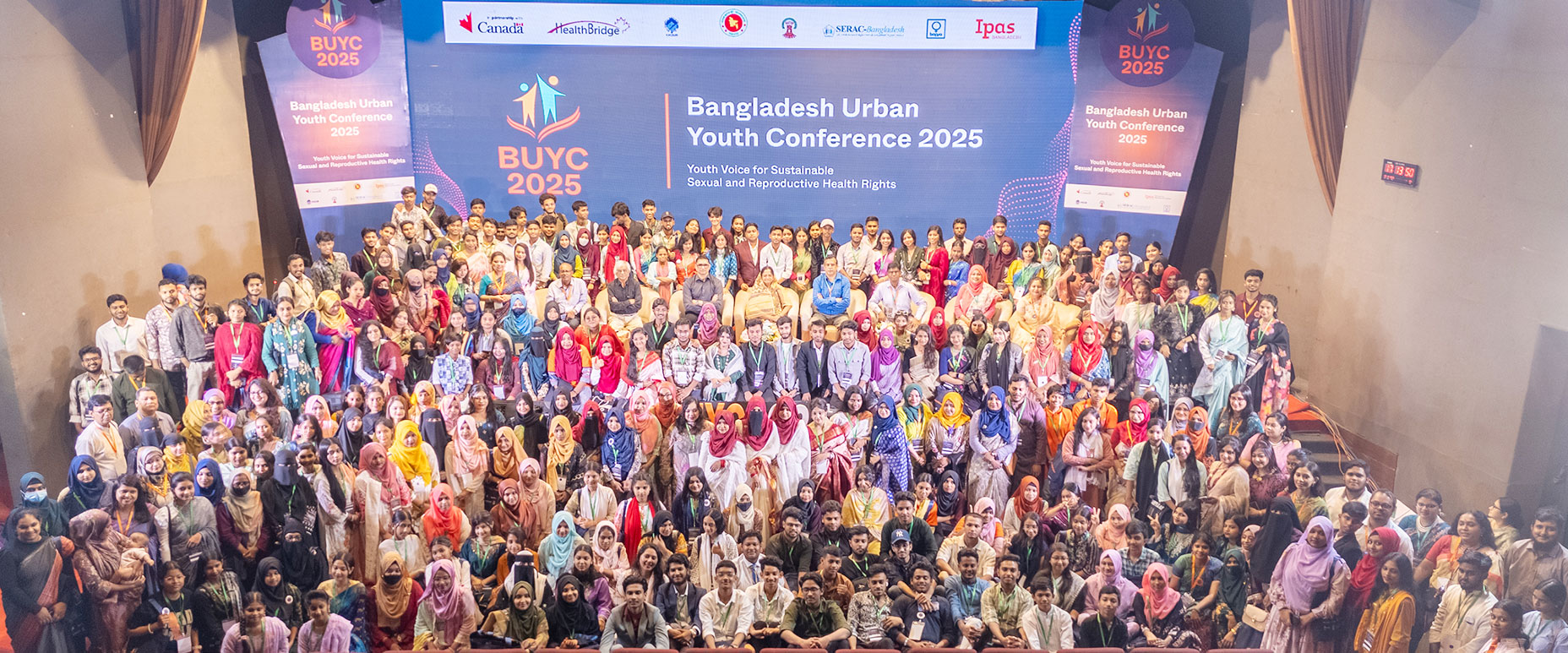
In August 2025, Ipas Bangladesh and partner organizations convened the first-ever urban youth conference in the country, themed “Youth Voice for Sustainable Sexual and Reproductive Health Rights (SRHR).”
The meeting brought together 650 diverse participants, including 550 youth volunteers from the Improving SRHR in Dhaka (ISRHRD) project, as well as policymakers, academics, health professionals, civil society leaders, and development partners.
This diverse gathering enabled young people from underserved urban communities to engage directly with decisionmakers on the future of urban health and sexual and reproductive health and rights in Bangladesh.
A youth-prepared policy document
A highlight of the conference was the launch of the Dhaka Declaration 2025, a youth-prepared policy document outlining a comprehensive vision for an inclusive and resilient urban health system.
“The Dhaka Declaration was finalized through a consultative consensus process before the youth conference and is now used consistently in our policy advocacy efforts as a youth-led framework of recommendations for strengthening the urban health system in Dhaka,” said Tania Tasnin, communication and youth mobilization coordinator, ISRHRD project, Ipas Bangladesh.
Under the ISRHRD project, youth volunteers led multiple collaborative discussions to strengthen the urban health system, with Ipas Bangladesh staff providing facilitation and technical support.
The process began with 24 youth mentors and expanded into wider community-level conversations. These discussions included a diverse group of men, women, adolescents, and people from lower socioeconomic backgrounds, all led by youth.
What the youth recommended
The Dhaka Declaration includes 16 recommendations addressing gaps in governance, service delivery, financing, and accountability. Key recommendations call for:
- Establishing a comprehensive urban health management framework with equitable access for all citizens
- Expanding primary health-care centers through general practitioners under a strong regulatory oversight in every ward with extended hours, linked to referral networks
- Creating zonal health offices for effective oversight of both public and private health facilities
- Strengthening sexual and reproductive health and rights services for women and adolescents, including adolescent- and women-friendly health centers in educational institutions
- Ensuring affordable access to medicines and diagnostic services, particularly for the urban poor
- Setting up call centers and referral mechanisms to support sexual and reproductive health and rights and respond to gender-based violence
- Allocating adequate funding in the national health budget for urban health systems.
Recognition for the youth’s leadership and commitment
During the conference, the declaration was formally handed over to Professor Dr. Md. Sayedur Rahman, special assistant to the Chief Advisor of the Government of Bangladesh, who welcomed the youth recommendations and assured that their perspectives would be considered in future health planning.
“When issues of rights emerge, the younger generation tends to be the most uncompromising in demanding them,” he said.
In his remarks at the conference, Edward Cabrera, First Secretary (Development–Health) at the High Commission of Canada, recognized the leadership and commitment of the youth participants, describing them as emerging advocates and future leaders in advancing SRHR and equitable health systems.
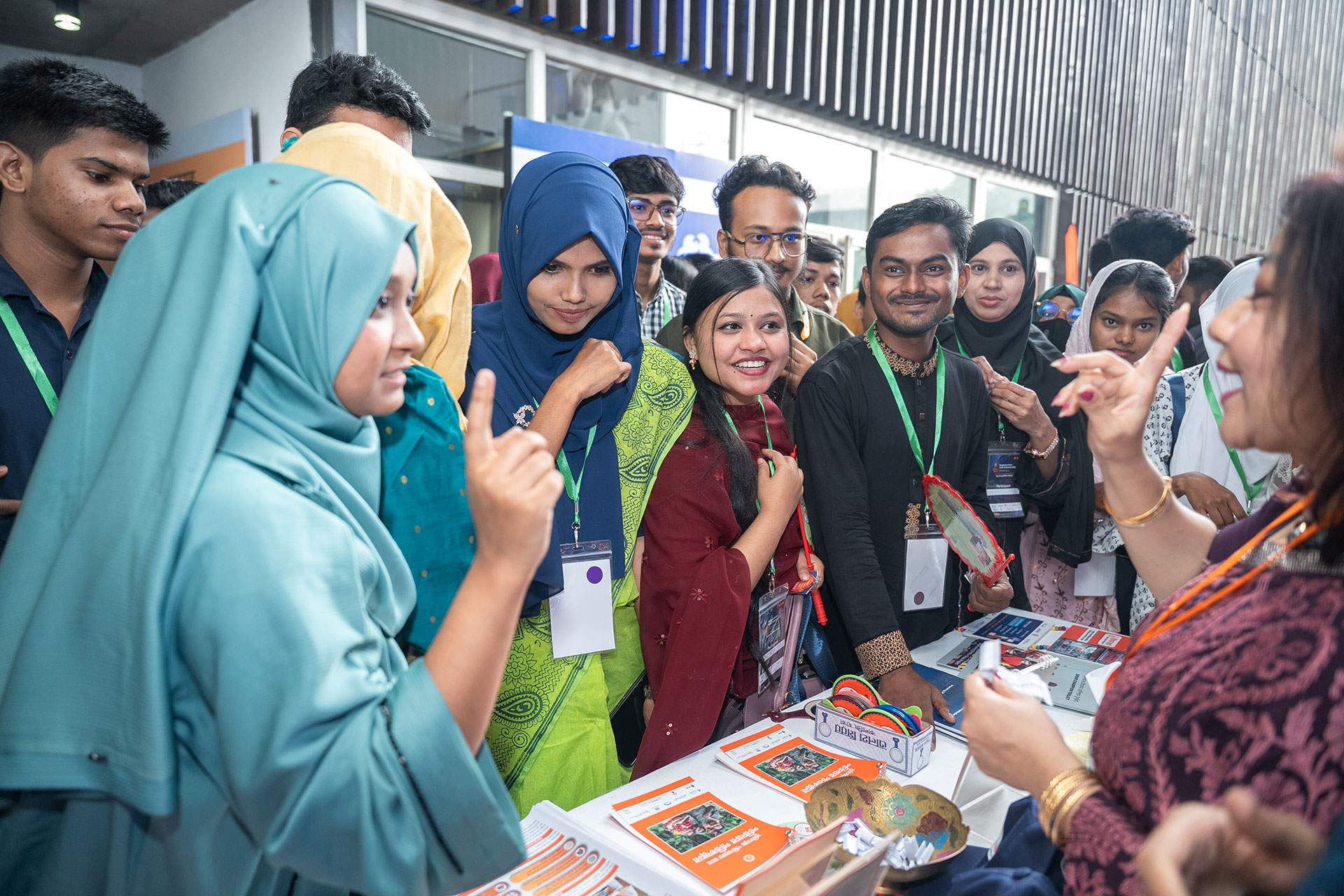
Leaders from the government and health sector pledged to advance equitable services, while youth shared experiences from low-income communities, highlighting their role in raising awareness, mobilizing peers, and shaping rights-based solutions for urban health policies in Bangladesh.
The event was supported by Global Affairs Canada through the HealthBridge Foundation of Canada.