
|
| Nicaragua’s Supreme Court recently upheld its total ban on therapeutic abortion. Nicaragua has one of Latin America’s highest maternal mortality rates. |
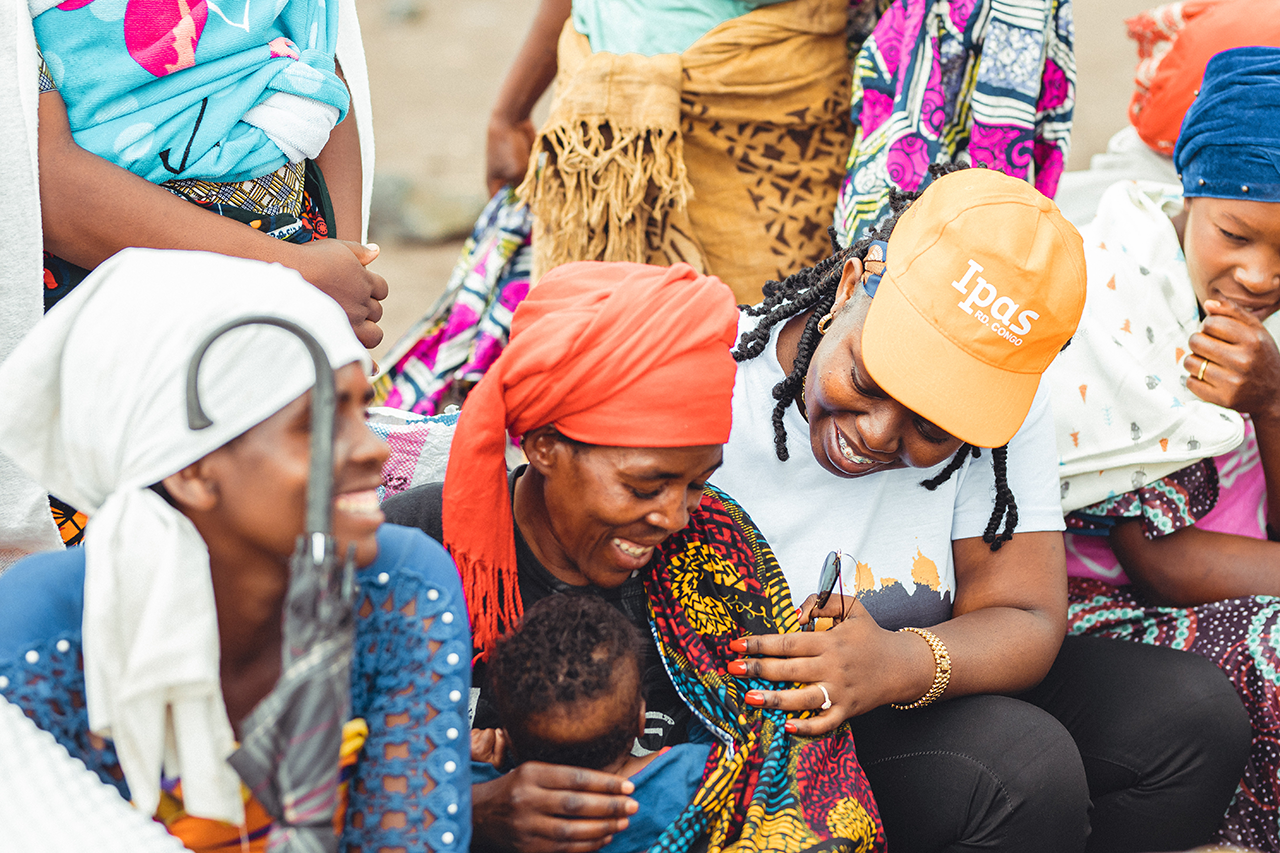
| photo by Sara Gomez |
In November 2006, Nicaragua became one of only four countries worldwide to ban abortion under any circumstance, including when a woman’s life is at risk. On July 8, the new penal code, which again eliminates an exception for therapeutic abortion — abortions performed to save the life or health of the mother — went into effect.
In January 2007, the Strategic Group for the Decriminalization of Abortion, or Grupo Estratégico por la Despenalización del Aborto Terapéutico, (GE) — a diverse collective of groups committed to restoring therapeutic abortion, including Ipas, women’s organizations, human rights groups, medical societies, community groups, children’s rights groups and academics — filed a petition with the Nicaraguan Supreme Court to declare the law unconstitutional. The GE argued that Nicaragua was denying women their basic rights to life and health, violating its own constitution and international law, which prohibits bans on abortion.
The Supreme Court had 60 days to respond; however, the original claim was never reviewed by the court — despite written requests from the GE demanding a response. Because the new penal code effectively overrides the original 2006 law, the GE’s claim is now void.
The
GE has presented a new claim of unconstitutionality before the Supreme Court,
again arguing that four articles in the new penal code are unconstitutional
because they violate the right to life, health, human dignity, individual
liberty and freedom from cruel, inhumane and degrading treatment.& The
claim also asks that President Daniel Ortega and President of the National
Assembly René Núñez are called upon to directly answer to this
appeal.
“The Supreme Court has a golden opportunity in its hands,” said
Ipas Central America Country Director Marta María Blandón. “If it accepts and
favorably resolves this demand, it would be very positive [in order for the
Court] to regain its prestige and to demonstrate to the entire population of
Nicaragua that this state power is acting independently of any political,
partisan or religious pressure and that its decisions are in accordance with
women’s human rights and the constitution.”
Nicaragua’s total ban on
abortion only heightens the danger faced by women and girls in a country with
one of the region’s highest maternal mortality rates — 170 deaths per 100,000
live births. Unsafe abortion continues to be one of the most significant — and
preventable — causes of pregnancy-related death in the region, with more than
900,000 clandestine procedures carried out each year.
For more information, contact:
Kirsten Sherk
Senior Associate, Media Relations
e-mail: sherkk@ipas.org
phone: 919.960.5612
fax: 919.929.0258