

|
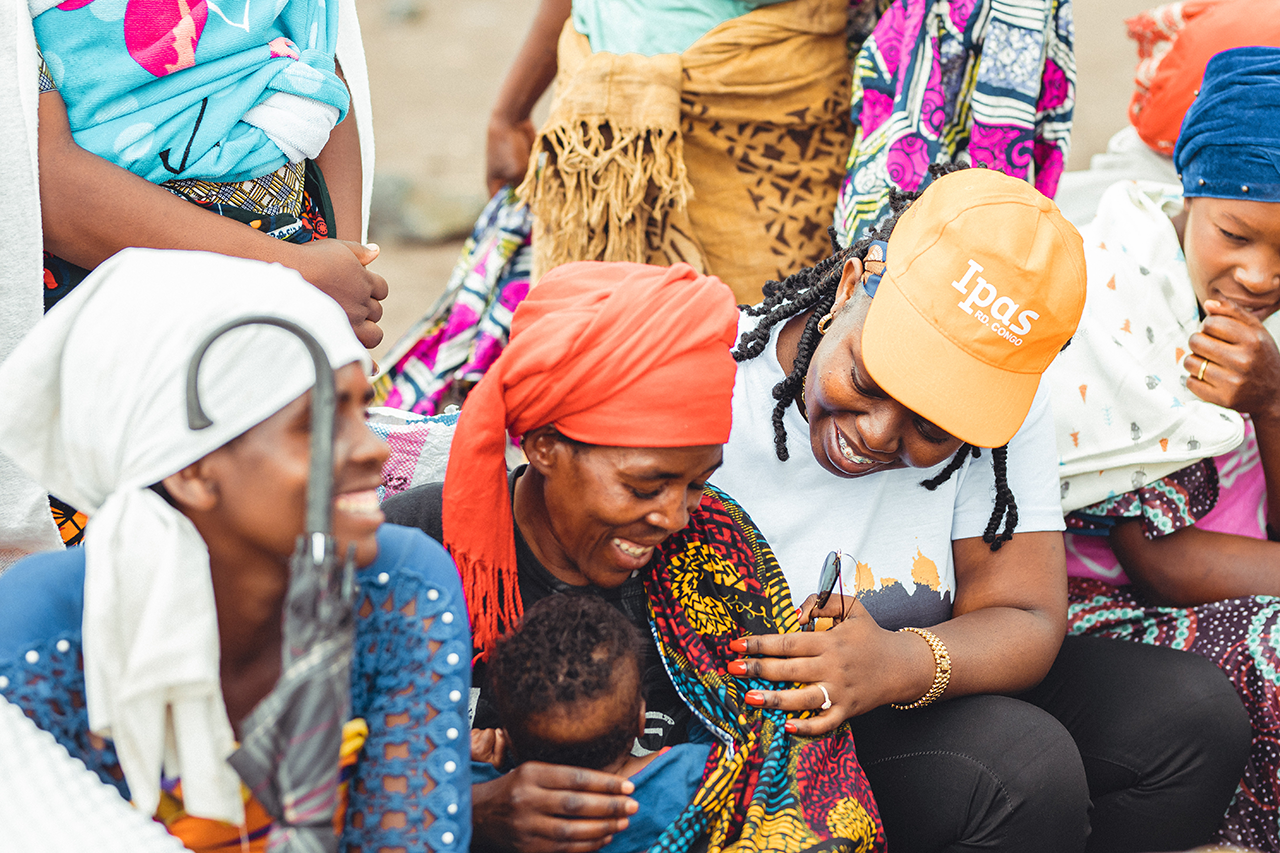
| In parts of India, China, and parts of Nepal and Vietnam, sex-selective abortion occurs regularly. Mothers in these countries often face pressures that encourage them to have boys and punish them for having girls. |
| Photo courtesy of the David and Lucile Packard Foundation. |
Sex-selection abortion is one of the most controversial issues in reproductive health, often dividing people who are otherwise committed to expanding access to reproductive health services. Advocates for reproductive choice are often torn between their desire to allow women to choose when and if to have children, and their own personal disagreement with the basis for that choice.
Sex-selective abortion has also led to country-wide effects. In countries w here sex-selective abortion occurs regularly, 108 boys or more are born for every 100 girls (without human interference, 104-107 boys are typically born for every 100 girls). In response to these skewed ratios, the governments of these countries have banned sex detection tests and, in a few cases, also sex-selective abortion to prevent women from choosing abortions based on the gender of their fetus.
But according to a new article in Reproductive Health Matters by Ipas Senior Research and Policy Advisor Bela Ganatra, such policies have only minimally reduced these abortions. Additionally, these policies have also greatly reduced women’s access to second-trimester abortion for legal and legitimate reasons, often putting their lives and access to health care at risk.
For years, China, South Korea, and parts of India, Vietnam and Nepal have had a strong preference for sons. Both cultural factors (such as males having a higher place in society) and economic factors (such as the need for men to work as farmhands in rural areas) play a part in these preferences. These countries also have laws that, in practice, permit abortion on a variety of grounds.
For more than 20 years the tool that has allowed health-care providers to determine the sex of a fetus has been ultrasound. But ultrasound is common in the public and private sector, and it is also used for purposes unrelated to sex selection, Ganatra says. Therefore, attempts to link ultrasound with sex selection makes laws banning sex-selection tests difficult, if not impossible, to enforce.
Instead, the focus in many countries has shifted to abortions that follow sex selection. But proving that an abortion occurs for reasons related to the sex of the fetus is equally difficult. Ultrasound sessions and abortions are usually performed by different health-care providers, often in different facilities and even different areas.
As a result, tremendous pressure emerges to control and restrict all second-trimester abortions. Providers, afraid of being accused of providing sex-selective abortions, may limit their services to the first trimester, even when second-trimester services are legal. Media campaigns to discourage sex-selective abortions sometimes take on imagery that condemns or vilifies all abortion services: television and print advertisements feature well-formed fetuses left in wells, lakes and drains; billboard ads use "feticide" and other loaded words that personify the fetus. In parts of India, fundamentalist religious leaders are also becoming actively involved with the sex-selection campaigns and are using for the efforts as a tool to restrict abortion for any reason.
The effect of these campaigns is that obtaining legitimate abortion services can be more difficult for the women who already have difficulty accessing safe services: poor, rural, and less educated women. These women are often unable to obtain services until the second trimester or even unaware that abortion is legal, Ganatra says.
The underlying cultural and economic factors that favor boys over girls, not ultrasound access, drive sex-selective abortion, Ganatra says. In India and Vietnam sex ratios differ by geography, becoming more unbalanced in areas with a greater preference for sons and falling to normal in areas without son preference. These differences appear despite widespread access to ultrasound throughout these countries. Ultrasound is commonly available in Japan, but a lack of son preference has led to normal sex ratios. Even in countries that put strong legal limits on abortion, such as Pakistan and Afghanistan, sex ratios may be more balanced, but son preference still exists in the form of higher infant and childhood mortality for girls as compared to boys.
"A ban on sex detection tests has a place, but the successful implementation of this depends largely on self regulation by individual providers and the commitment to medical ethics and vigilance exercised by medical professional bodies," Ganatra says.
Fortunately, some countries are making broader efforts to attack the root of this problem by making daughters more wanted. In South Korea, sex ratios, which were once greatly imbalanced, are now returning to normal after women gained status in society through employment opportunities, increased education, and parents with enough money to be financially secure without dependence on their sons."Correcting the imbalances in the sex ratio at birth is a complex issue without easy answers,"Ganatra says. "Sex-ratio balance cannot be achieved by controlling the technology of sex detection, nor by controlling women's access to safe abortion since neither of these are the root causes. Strategies should focus on countering the gender inequality that drives son preference. This is the only sustainable way to reduce sex selection."
For more information, contact media@ipas.org