







Enabling civil society organizations (CSOs) in sub-Saharan Africa to develop research ensures equitable scholarly representation and addresses local problems in sexual and reproductive health. To this end, a transnational research collaboration was formed to evaluate abortion services and develop the research capacity of two CSOs in the Democratic Republic of Congo (DRC). The team included Karolinska Institutet, Partners for Reproductive Justice (IPAS) and the National Midwives’ Association (SCOSAF). The objective of this article is to discuss the context of the partnership, including research capacity-building inputs, processes, outputs, and outcomes, as well as lessons learned and recommendations. Activities were tailored to the research capacities of each CSO and the research team of clinical care providers over the two-year project period. Research capacity-building resulted in increased opportunities for team members to conduct research and manage research projects outside of academia. Overall, there were improvements in midwives’ capacity to design and conduct research, and in the midwives’ association’s capacity for research management and project administration. Recommendations for others include pragmatic incorporation of gender considerations, approaches to organizational and individual research capacity-building, and baseline CSO capacity assessments for research management. Health research conducted in a non-academic setting, specifically within CSOs, can be a pathway to research equity. In DRC, it strengthened health professionals in their capacity to generate evidence to influence local abortion policy and health services in Kinshasa, DRC.
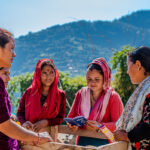
In rural Nepal, women’s lives have often been restricted by silence and unspoken rules. From menstruation taboos to misinformation on family planning and abortion, many young women are taught to accept harmful practices as normal. For years, Himali Khatri did too. “I am almost 40 years old, and until now, I have never received such knowledge about reproductive health,” she says.
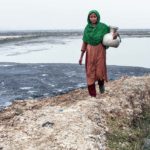
A qualitative study by Ipas Bangladesh reveals how extreme weather events (EWEs) caused by climate change worsen sexual and reproductive health and rights (SRHR) outcomes for women and girls in coastal Bangladesh.
Findings from literature reviews in Côte d’Ivoire, the Democratic Republic of Congo, and Mali
A three-year project by Ipas and partners aims to deepen understanding and evaluate solutions to reduce gender-based violence (GBV) and discrimination in secondary schools in Côte d’Ivoire, the Democratic Republic of Congo (DRC), and Mali.
For women in Uganda, the experience of seeking and receiving quality abortion care within the public health system can be a challenge due to a restrictive law and abortion stigma. Research shows that high-quality abortion care is client-centered and provided by clinicians that are trained in compassionate communication to improve a client’s experience.

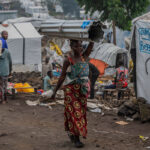
Here’s how Ipas works with local partners and humanitarian organizations to ensure that women and girls in crisis settings can access the sexual and reproductive health care they urgently need.
A high level gathering in South Africa in May 2025 brought together nearly 40 members of parliament from G20 countries, East and Southern Africa to discuss the economic benefits of investing in women’s health.
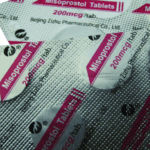
A new study using mystery clients reveals major gaps in access to abortion with pills in Kinshasa. Only 23% of pharmacies gave correct dosage info—putting people’s health at risk.
This publication offers a new definition of sexual and reproductive wellbeing and a short measure to assess it, shifting attention toward whether people are able to live the sexual and reproductive lives they want, not just whether services were delivered.
The PMAC model has demonstrated clear wins for clients (through personalized care) and the health system (by positioning pharmacies as accessible contraceptive outlets). But the third leg of the triangle – the provider – remains less understood: Can pharmacies profit while delivering these services?
In cyclone-affected communities in Bangladesh, researchers found that extreme weather can make it harder for people to get the sexual and reproductive health care and information they need, and that marginalized groups, such as low-income and displaced people, experience the most severe disruptions.