







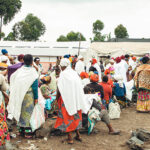
As a devastating armed conflict forced thousands of displaced people to gather in camps outside Goma in the Democratic Republic of Congo (DRC), the Ipas DRC team knew sexual and reproductive health services that included abortion were desperately needed. In the spirit of their tagline, “Makoki ya Mwasi,” a Lingala term that loosely translates as “the rights of women,” Ipas DRC refused to let a lack of funding deter them. They only had enough resources for 10 days of services, but worked around the clock to launch a mobile clinic and make every second count for the women and girls who needed them.

The Abortion-related Morbidity and Mortality in Fragile and Conflict-affected Settings (AMoCo) study is a multi-year research project to assess the magnitude and severity of abortion-related complications in hospitals located in fragile or conflict-affected areas of the Democratic Republic of the Congo (DRC), the Central African Republic (CAR) and Nigeria.

Around the world, recognition is growing that climate justice and reproductive justice are inextricably linked—and that effective solutions to the climate crisis require a focus on women’s rights and needs. Yet philanthropic support is lagging: Only 0.01% of global funding goes to projects that tackle both climate and women’s rights.