







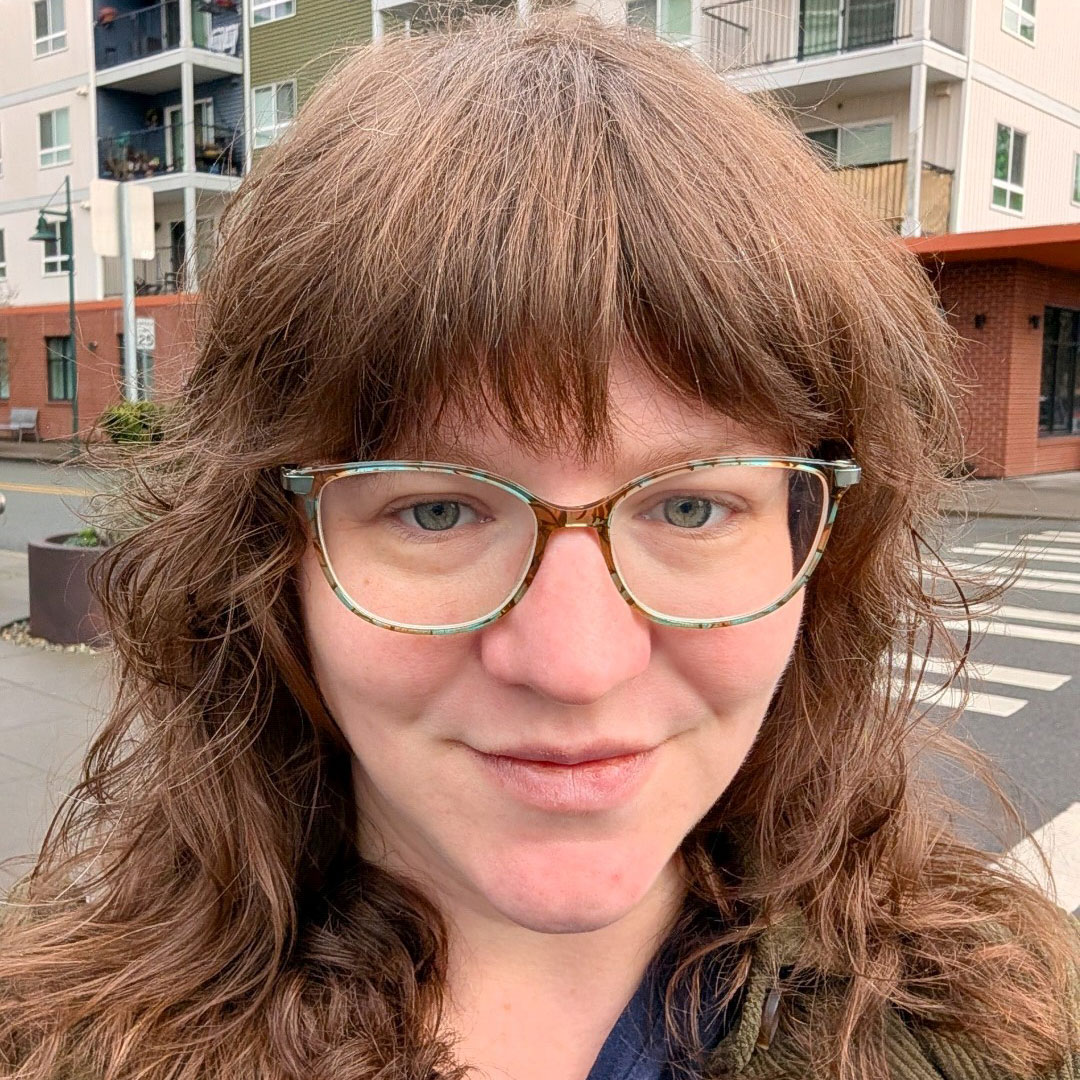
Lori Hayes
Bernadette mattered. My abortion mattered.
Lori is a research grant manager, mother, and longtime reproductive rights advocate currently serving on the Board of Directors for Pro-Choice Washington. Originally from Ohio, she now lives near Seattle, Washington, with her husband, son and pets. In her essay, she shares the heartbreaking story of ending a wanted pregnancy just before Roe v. Wade was overturned and how speaking out became her way to honor the complexity of that experience. Through sharing her story, Lori calls for compassion, access and the courage to name abortion care as essential health care.
This essay is part of Unbreakable Threads: Stories of reproductive justice.
The day after my second-trimester abortion, I woke up to the news that Roe v. Wade had been overturned. It was June 24, 2022, and like many women across the country, I was devastated. But my circumstances made the headlines hit differently. In the days that followed, I was forced to navigate my own grief while absorbing the devastating impact that the Dobbs decision would have on reproductive health care. I made a conscious decision to use my voice and tell my story, even when that felt difficult. Sharing what I had experienced felt vital not only for my own healing but as a form of activism.
This decision led to unexpected places: board meetings, state Senate hearings and even the checkout line at Aldi. Each time I spoke or wrote about my abortion, I felt the power of that story grow. That power fueled a resilience that I would not have imagined possible on that upsetting June morning.
The ceiling of the ultrasound room had twinkling lights.
The ceiling of the ultrasound room had twinkling lights. Before the appointment began, I remember thinking it must be weird to get bad news under artificial stars. It was my 20-week anatomy scan, a routine part of pregnancy. My husband Matt was there, and I was excited. At my 12-week ultrasound, our daughter had been vivacious, doing frog kicks at an impressive clip.
Matt and I chatted while the technician began. I noticed that the image seemed blurry, and that the tech was unusually quiet. As an anxious person by nature, I tried not to worry. That is, until she told us she wanted to get the doctor because she was concerned about the baby’s kidneys.
The wait for the maternal-fetal medicine doctor was excruciating. I tried to convince myself that I was catastrophizing, but when the doctor finally arrived, the news was worse than anything my pessimistic brain could have dreamt up. She told us they could not confirm the presence of kidneys. I was puzzled by that phrasing, this inability to confirm or deny that my child had a fatal condition. She explained that without kidneys, fetuses cannot produce amniotic fluid. The reason the ultrasound was so blurry was that there was almost none left. At the moment, our daughter seemed fine, kicking carelessly around. But if we did not act, my uterus would continue to dry out, leaving her lungs underdeveloped. The lack of fluid would mean she would be physically crowded and likely develop clubbed feet. I would likely miscarry or go into labor early, and even if I made it to term, she would only live a few hours after delivery.
My husband and I shuffled out of that doctor’s office, stunned and somber. The ride home was very quiet. We knew right away that termination was the right choice for our family. It was the only way to prevent our daughter from ever feeling pain. There was no happy ending to be found, but at least this way would prevent her from suffering.
The next 10 days were a liminal space, a world of tragic in-betweens. I was still pregnant, but I was not going to have a baby. There was no hope, but I needed a fetal MRI to confirm the inevitable. We had to tell our loved ones, make appointments, negotiate insurance and take leave from work, but none of these were as enormous as the true task—coming face-to-face with the grief of losing a child before we got to meet her. We decided to name our daughter Bernadette, meaning “strong as a bear,” as an homage to the wooded area where we lived.
I felt like my world had shattered, and amidst my thick fog of grief, I wondered if I would ever feel joyful, or even neutral again. I remember feeling extremely lonely, and I wished that I could hear from someone who had experienced this loss a few years ago, so that I could have proof that life would go on after this horrible event.
The abortion required two doctor’s appointments over two days. On the first day, after many hours of waiting, I underwent a painful procedure to dilate my cervix and received medication to painlessly stop Bernadette’s heart. The second day, my husband and I entered the clinic amidst yells from a lone protester pleading for me not to kill my baby. I seethed at the assumptions she was making about my life. Would she be doing the same if she knew what I had been through? Would she have more empathy?
Inside the clinic, there was more waiting, more medication, more paperwork and another ultrasound. Just before the procedure, I broke down sobbing for the daughter I had to let go before I could meet her. The abortion provider was an older woman who I could tell had been in this situation before. She was so kind, and so strong. I apologized for being so upset and told her I would try to keep it together.
“You don’t need to keep it together here,” she replied. “This is a place where you’re allowed to fall apart.”
Next, I was put under sedation. I woke up, and it was all over. They gave me a card with Bernadette’s footprints. They made sure I was healthy and safe and then let me go home. I expected to be gutted, but I was so relieved. I was relieved that the wait was over, that Bernadette would never feel pain and that I could begin to move on. Even in those first moments, I was already reaching for resilience.

The day after my second-trimester abortion, I woke up to the news that Roe v. Wade had been overturned.
Abortion was no longer a hypothetical political issue; it was my lived experience.
The next morning, I woke up to my phone blaring with notifications. The United States Supreme Court had overturned the federal right to abortion. On a national level, women were waking up to find out that the procedure that had provided me so much relief was now illegal or under threat. My plan to focus on my own grief was shattered. My place in the reproductive rights movement was now both personal and vulnerable. Abortion was no longer a hypothetical political issue; it was my lived experience.
I was not new to conversations and activism around reproductive rights. Since high school, I have been adamant that child-bearing people need access to the full range of reproductive rights. In college, I joined pro-choice rallies under the wing of a mentor who later became president of the National Organization for Women. As a young adult, I stood outside clinics to shield patients from protestors. But in my everyday life, I rarely spoke about this advocacy, particularly within the community that I grew up in. I was raised Catholic and talking about abortion rights felt like a minefield. Many people who I deeply respected and had inspired my strong urge to seek justice were strongly against abortion. Mostly, it was unclear where the vast majority of people I knew stood, because no one talked about it. Abortion was at best a hypothetical topic and at worst a shameful secret.
I had a choice to make. I could continue supporting pro-choice causes and candidates while keeping my own story private. I could tell no one but my closest loved ones that I lost the baby. Or I could honor the impact Bernadette had on me and my family by speaking the harder truth—that I had chosen an abortion under devastating and complicated circumstances. In the wake of the Supreme Court’s ruling, sharing my story felt like something I had to do.
I did not grow up with stories of abortions. I did not hear about people I knew losing wanted pregnancies or terminating unwanted ones. Outside of activist circles, I had no clue how anyone would react. I wasn’t even sure I wanted to call what had happened to me an abortion, because I worried that using that word would suggest that my pregnancy had been unwanted. But I recognized that by sharing my story and using the correct medical term, I could contribute to a more accurate narrative: Abortion is health care, and it takes many forms across a wide range of circumstances.
And so, on the day after Roe was overturned, I shared Bernadette’s story in an open letter on social media. I wrote about the protestors, about my pregnancy, about the heartbreak I had experienced in the prior weeks. I shared knowing it would reach family and family friends with strong religious views who opposed abortion. I shared in hope that if they heard my story and felt my anguish—a person they cared about—maybe they would understand why a constitutional right to the full range of reproductive health care is so important.
To my surprise, the response to my raw grief was compassionate and loving. People I had assumed were vehemently opposed to abortion thanked me for my words and offered kind words to me and my family. A former neighbor asked to share my open letter at a local Democrat ward meeting to help underline the importance of an Ohio ballot measure to protect abortion rights. Each one of these interactions not only inspired me to share more broadly and openly; they also fueled my emotional recovery and resilience. I became more comfortable talking about my abortion and subsequently joined the Board of Directors for Pro-Choice Washington. I testified to the Washington state Senate about the importance of ensuring that miscarriage and abortion remain decriminalized. Some days it felt like I was screaming into a void, but most of the time, I recognized that by speaking matter-of-factly about my abortion and about Bernadette, I was removing the shame and stigma often associated with these conversations.
I did not grow up with stories of abortions. I did not hear about people I knew losing wanted pregnancies or terminating unwanted ones.
“I heard your story.”
One day, I was back in my hometown and had stopped at a grocery store to grab a few things and was startled when I heard my name. A woman who had been in the church choir with my parents for my entire childhood was walking up to me. We exchanged pleasantries, and then she told me, “I heard your story. About you, and your daughter, at our get-out-the-vote meeting.” I froze, bracing for judgment. Was I about to get shamed in a checkout line by a midwestern church lady? Instead, she looked me in the eyes and she thanked me for sharing my story and told me she was praying for me and my family. I was stunned. A woman that I knew only in entirely Catholic contexts had heard my story, and it had mattered to her.
I know that making sure everyone can access safe, affordable, non-judgmental reproductive care takes more than storytelling. It also takes activism, courageous leaders and lawmakers, and reforms to our broken health care system. But it will also take people like me, with nuanced lived experiences showing resilience and turning private challenges into opportunities to shift hearts and minds. It will take diverse voices speaking about abortion in all its forms, be they joyful or sorrowful, life-altering or routine, devastating or ordinary.
My act of resilience is writing this essay. I share not only the heartbreak that I endured, but also the empowerment that came with shattering my silence. Bernadette is still often on my mind, and her story is often on my lips.
Recently, my son, born one year after our loss, said Bernadette’s name for the first time as he cuddled a teddy bear made in her honor. My son will grow up hearing about Bernadette, and when he is old enough, about my abortion. He will learn that it was painful, complicated and necessary, and that it paved the way for our happy life. He will hear me declare openly and often that Bernadette mattered, and that my abortion mattered.
Nothing makes me feel more healed, whole and resilient than knowing he will know that truth.
Bernadette is still often on my mind, and her story is often on my lips.
Together, we’ll keep moving forward.