



A conversation with Ipas research expert Sally Dijkerman on why climate action must include sexual and reproductive health and rights, and what it will take to move from evidence to real-world solutions.
Climate justice and sexual and reproductive health and rights work are too often kept separate, even though communities experience them together. That’s why Ipas and partners in the Sexual and Reproductive Health and Rights and Climate Justice Coalition co-authored this perspective, produced in partnership by Ipas’s Sally Dijkerman with Heather McMullen (Queen Mary University of London) and Natalie Hammond (Manchester Metropolitan University), and written on behalf of the coalition:
Ipas was a founding member of the coalition in 2021. Alongside Women’s Environment and Development Organization, Asian-Pacific Resource and Research Centre for Women, and Women Deliver, Ipas helps convene members, connect organizations across regions, share timely information, and coordinate collective advocacy and action plans.
In the perspective, Dijkerman and co-authors reflect on three challenges that shape the coalition’s work: building the evidence on how climate change affects sexual and reproductive health and rights, pushing back on harmful narratives, and identifying just, locally led solutions. They also point to practical tools and approaches, including a coalition messaging guide and feminist lens that challenges traditional monitoring and evaluation, to help advocates communicate clearly and design effective solutions that center the communities impacted most.
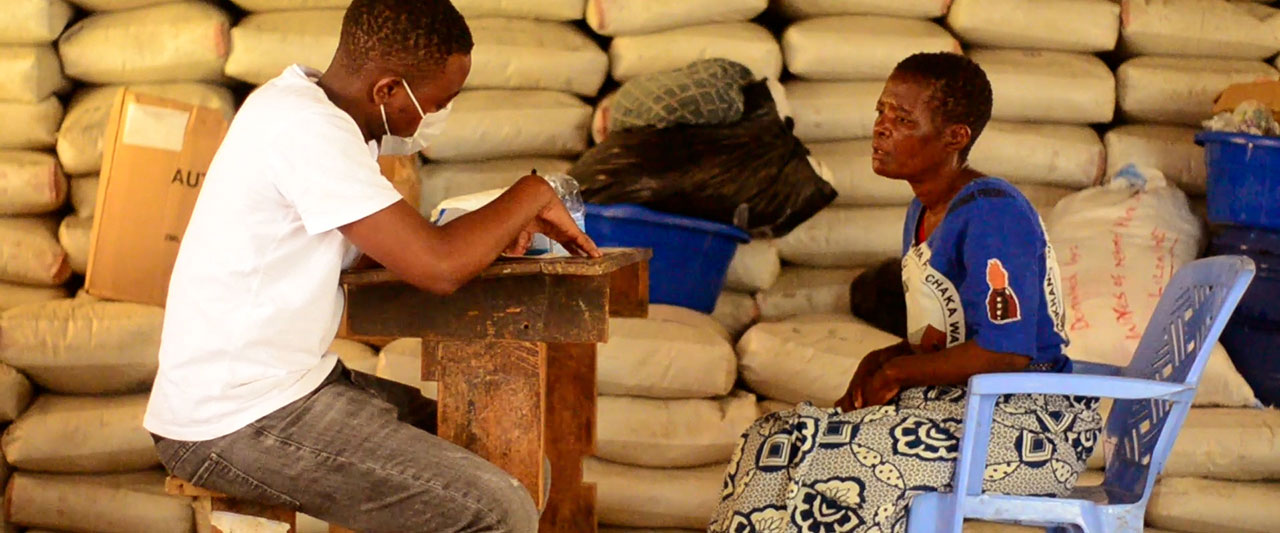
“Healthy people and communities are better equipped to adapt to climate change,” says Ipas Associate Director of Program Evidence Sally Dijkerman (pictured right).
“However, the climate crisis is threatening the right to health, including sexual and reproductive health and rights.” Dijkerman studies how climate change affects sexual and reproductive health and rights and helps co-convene the Sexual and Reproductive Health and Rights and Climate Justice Coalition. She shares insights from her work below.

What is the Sexual and Reproductive Health and Rights and Climate Justice Coalition, and what unique value does it bring?
Sally Dijkerman: The coalition is a participatory and inclusive space that brings together a diversity of partners working from the local to the global level to mobilize collective strengths for sexual and reproductive health and rights (SRHR) and gender equality from a climate justice approach. We break down silos between SRHR and climate justice organizations, facilitate knowledge sharing, jointly coordinate, and amplify the voices and priorities of grassroots organizations. We advocate for SRHR and climate change policies, programs, and funding mechanisms that advance gender equality, human rights, and climate justice.
What are a few key accomplishments of the coalition so far?
Over the past four years, we have been documenting the impact of climate change on SRHR; creating collective policy recommendations and advocacy strategies; and promoting collaboration and learning opportunities. We have launched key resources, including Integrating SRHR into the UNFCCC Gender Action Plan (GAP) at COP27 and SRHR: Integral to the Climate and Health Response at COP29 for the health community. We have designed both universal messages and recommendations for our work and specific messages for key events, for fellow advocates, policymakers, and the media.
We have convened several in-person training sessions and side events at the annual UNFCCC Bonn Climate Change Conferences and Conference of Parties (COP), focusing on SRHR as a critical element of inclusive, human rights-based, gender-transformative climate action. In July 2025, the Coalition partnered with UNFPA and the Government of Brazil to design and host sessions at the 2025 Global Symposium on Climate Justice and Impacted Populations – Rights in a Changing Climate: Sexual and Reproductive Health and Gender Equality, culminating in the Brasilia Call to Action on Climate Justice, Sexual and Reproductive Health and Rights, Gender Equality, and Impacted Populations.
In the perspective, you argue that climate action and sexual and reproductive health and rights work cannot stay siloed. Why is it urgent to connect them now?
The climate crisis is directly and indirectly impacting sexual and reproductive health and rights (SRHR), but too often, climate action does not include SRHR. Likewise, it is still the exception, not the rule, for SRHR-focused organizations to recognize the impacts of the climate crisis on SRHR and integrate a climate justice lens into their work. Our goal is to make clear that these efforts cannot remain siloed anymore and must come together to act. SRHR programs must be climate-just and climate-aware to achieve sustainable progress, and climate justice cannot be achieved without integrating comprehensive SRHR.

SRHR programs must be climate-just and climate-aware to achieve sustainable progress, and climate justice cannot be achieved without integrating comprehensive SRHR.
In the section on resisting harmful narratives, you describe the coalition’s messaging guide. What harmful framing is it designed to prevent, and what does it help people communicate instead?
SRHR and climate justice is an under-addressed topic area that affects the lives of some of the most marginalized people in the world. Without an appropriate human rights-based approach to SRHR, harmful narratives can take hold, such as framing contraception as a climate solution by suggesting that solving the climate crisis depends on people’s bodies and reproductive choices.
We developed the guide to support better communication about the interlinkages between SRHR and the climate crisis for anyone interested, including policymakers, advocates, or media. This guide aims to bring awareness to this issue and equip the reader with knowledge and framing to engage the subject in a way that upholds human rights.
We hope people and organizations will use the Messaging Guide to center human rights, bodily autonomy, menstrual dignity, and intersectionality in their communications and programming on SRHR and the climate crisis.
In the “just solutions” section, you recommend feminist monitoring, evaluation, research, learning, and adaptation (MERLA). What is feminist MERLA, and why is it useful here?
Feminist MERLA and climate justice share important core principles, including shifting power, intersectionality, and centering the leadership of those most impacted by injustices. Feminist MERLA explicitly addresses the underlying causes of gender inequality, one factor that leads women and girls to be disproportionately impacted by the climate crisis.
Too often, traditional MERLA approaches focus on accountability to donors and other stakeholders in positions of power, rather than accountability to the communities which the programs aim to help. Conversely, feminist MERLA values communities as collaborators and leaders in the creation of knowledge and programs, not just passive recipients. As a result, the feminist MERLA approach can advance gender equality and locally led solutions, both aims of climate justice and the coalition.
The perspective states that we now have enough evidence to act. What does that mean?
Many people and institutions have contributed to the growing evidence base, including but not limited to coalition members. Ipas, for example, has invested in research on this intersection in many countries where we work. YLabs, a coalition member, created a helpful online resource that summarizes the evidence, solutions, and partnerships at this intersection. It is clear from the evidence that the climate crisis is an SRHR crisis. This evidence is critical to our advocacy for increased attention and prioritization of this issue, but now we must prioritize investing in solutions. With limited resources available, we need to prioritize innovating, testing, and refining programs that successfully integrate SRHR and climate justice.
In the perspective, you note that there are too few proven models that successfully integrate SRHR and climate action. Why is that?
Climate adaptation must be locally led and context specific. Beyond that, there is a lack of rigorously tested solutions at the intersection of SRHR and climate action simply because both issues are underprioritized globally. There is a lack of funding being invested in these integrated programs. Climate adaptation in general is extremely underfunded, with most global funding still going toward climate mitigation. Furthermore, the funding that does exist is generally siloed between sectors, preventing integrated solutions from emerging. Ipas is working to address this issue by advocating with donors to increase integrated funding sources.
What does the coalition want advocates and organizations to do next?
In addition to strengthening awareness and capacity at this intersection, we are calling for more partnerships and collaboration between SRHR and climate adaptation practitioners, building alliances across sectors and institutions to innovate and implement systems-level solutions.
We also call for advocacy for strengthened, integrated policies. SRHR actors should support ambitious climate action in countries’ Nationally Determined Contributions (NDCs), National Adaptation Plans (NAPs), and Health NAPs. They can also advocate and partner with health systems to strengthen the capacity of the health workforce on climate change and disaster preparedness.
The climate crisis is a reproductive justice crisis.
Our research in settings around the world finds that climate change undermines people’s right to have a child, to not have a child, and to parent children in safe and healthy environments. Yet we know that the people most impacted have solutions—and we must listen. Then we must act. Click on the boxes below to learn more about how Ipas works to ensure sexual and reproductive health are integral to climate solutions at every level of society—and that the people most impacted are actively engaged in building climate resilience within their own communities.
Learn more about our climate research findings