







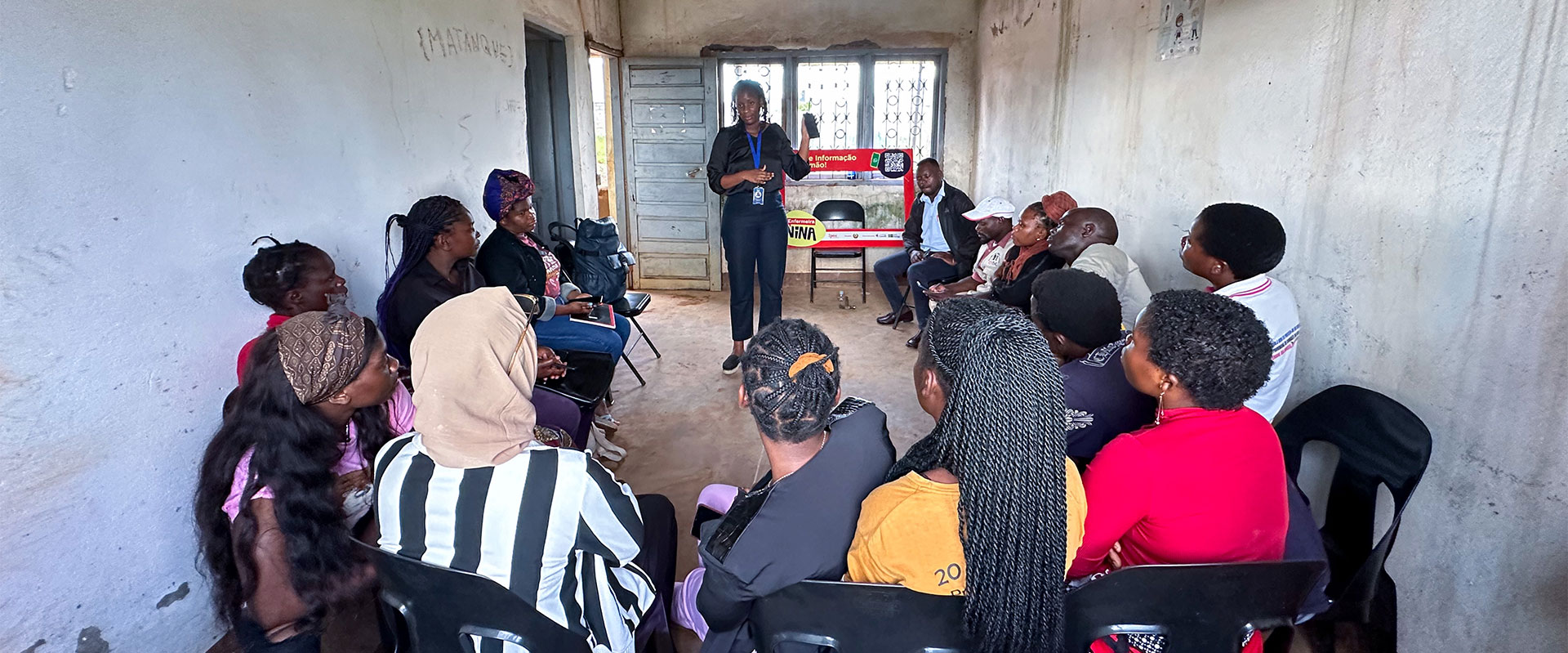
Ipas Mozambique has marked a transformative chapter in its commitment to advancing reproductive justice with the launch of both a community resource center to foster local leadership on reproductive rights and a chatbot designed to reach rural youth with essential sexual and reproductive health information. Both innovations are already making an impact.
Together, the Reproductive Justice Resource Center and the “Nurse Nina” chatbot demonstrate Ipas Mozambique’s integrated model for change—combining community-driven action with scalable digital solutions to ensure that reproductive justice is both rooted locally and amplified widely. Whether it’s through a young leader co-facilitating a dialogue circle at the Resource Center or a rural girl using the chatbot to understand her reproductive rights, these innovations are shaping a new generation of empowered Mozambicans.
“It is truly innovative to have the Ipas Resource Center with a focus on reproductive justice,” says Ivo Salamandane, a community engagement advisor for Ipas Mozambique based in Niassa. “We are already welcoming partners who use the space to discuss sexual and reproductive health, and we envision creating a virtual library that will provide adolescents and young people with structured and reliable information about their reproductive rights. This initiative is both exciting and forward-looking, and it is already making a difference for Mozambique.”
Lichinga’s beacon of change: The Reproductive Justice Resource Center
The Centro de Recursos para a Justiça Reprodutiva (Reproductive Justice Resource Center) opened its doors last year in Lichinga, the capital city of Niassa Province in northern Mozambique. Affectionately known by local communities as “Omutxekone”—a term from the Emakua language, the most widely spoken language in Mozambique—the Center is more than a physical structure. Omutxekone conveys the meaning of “a place of unity” or “a space where people come together for a shared purpose.” Rooted in local realities, the Center represents a space for collective transormation, dialogue, and community-driven change.
Strategically designed to strengthen the capacities of community-based and civil-society organizations, the Center offers an opportunity for grassroots leaders—especially young people and women—to access tools, trainings, and safe spaces where their voices are not only heard but amplified. From hands-on workshops to intergenerational dialogues and thematic exhibitions, the Center is a living embodiment of inclusion, dignity and agency. It is a vital anchor for sexual and reproductive health and rights (SRHR) advocates—a space where movements gain momentum, alliances are forged, and the future of reproductive justice in Mozambique is actively shaped.
The Center aims to:
- Deliver tailored trainings on SRHR, safe abortion, gender-based violence and intersectional challenges such as climate change and humanitarian crises.
- Foster sustainable grassroots advocacy by equipping organizations with management tools, monitoring frameworks and strategic planning resources.
- Provide consistent technical support and evaluation, ensuring local actors are not only reactive but also strategic in their work.
Ipas Mozambique is developing an online platform and digital library to host training manuals and community resources, laying the groundwork for future training programs. While structured trainings are coming soon, several impactful activities have already taken place at the Center, including:
- Strategy meetings with local leaders and organizations to align programs and reinforce the Center as a collaborative planning space.
- Roundtable discussions with diverse local stakeholders—including community groups, civil society organizations, government representatives, and donors—who convened to find common ground and set action plans. One gathering focused on the barriers to sexual and reproductive health care for women with disabilities, including structural (like lack of ramps), technological (like absence of braille materials), barriers in the built environment, and attitudinal challenges. Another roundtable explored SRHR in the context of displacement, conflict and climate change, identifying key actions such as integrating SRHR in emergency response plans, creating safe spaces for displaced women and girls, and involving community-based organizations in humanitarian responses.
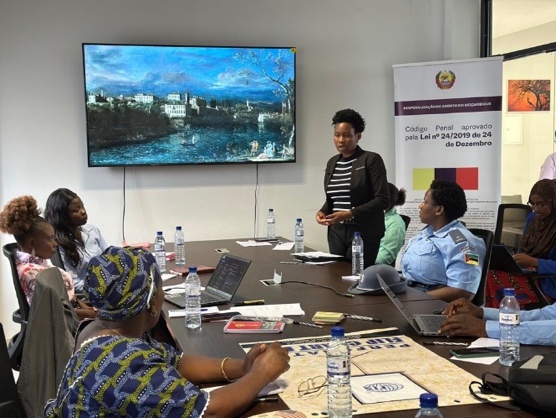
A community dialogue at the Reproductive Justice Resource Center brings together diverse stakeholders to discuss how sexual and reproductive health and rights are impacted by conflict and climate crises.
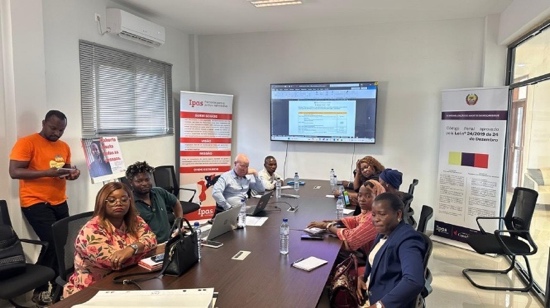
A roundtable discussion at the Reproductive Justice Resource Center on how to support women with disabilities in accessing reproductive health care.
Enfermeira Nina: A digital ally for rights and information
Complementing the grassroots work of the Reproductive Justice Resource Center, Ipas Mozambique has introduced another impactful innovation: The Enfermeira Nina (or “Nurse Nina”) chatbot. Available via WhatsApp, Nurse Nina provides a confidential, automated, and user-friendly digital platform that provides accurate information in Portuguese on SRHR and gender-based violence.
Building on the success of Ipas’s Nurse Nisa chatbot in Kenya and Democratic Republic of Congo, Ipas Mozambique collaborated with local partners to adapt the chatbot and its contents to the local context and language, ensuring it filled information gaps in underserved rural communities. Before launching the chatbot in Mozambique, Ipas worked with youth leaders from our local partner ACABE (Associação Amigos da Criança Boa Esperança / Association of Friends of Children of Good Hope) to pre-test the platform, ensuring its relevance and accessibility for adolescent girls and rural users. Their insights shaped final adjustments and strengthened local ownership.
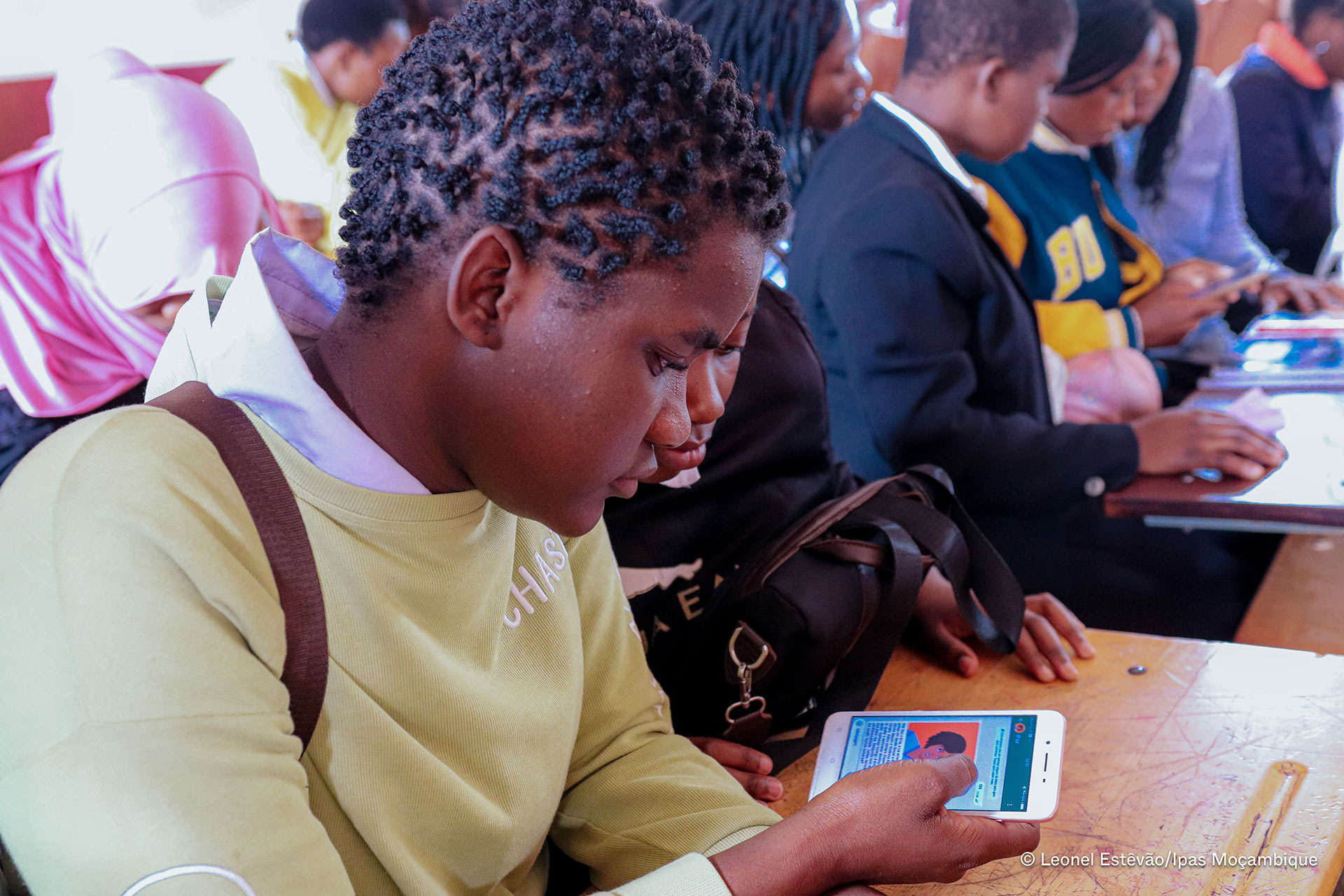
Youth leaders from Ipas’s partner ACABE work with a group of adolescent girls to pre-test the Enfermeira Nina chatbot to ensure it’s accessible and relevant to local youth.
During its first year, the platform reached over 15,000 users
During its first year, the platform reached over 15,000 users, with:
- 66% identifying as women
- 38% aged between 20-24 years
- 64% from beyond the provinces Ipas supports, with additional reach in South Africa, Brazil, India and Democratic Republic of Congo
The most consulted topics include safe abortion, contraception, menstrual health, STIs, and gender-based violence—all areas often clouded by stigma and misinformation.
As Elina Judite Massengele, governor of Niassa Province, emphasized at the launch event, Nurse Nina expands access to vital health information, acting as a trusted guide, a virtual companion and a tool for bodily autonomy.
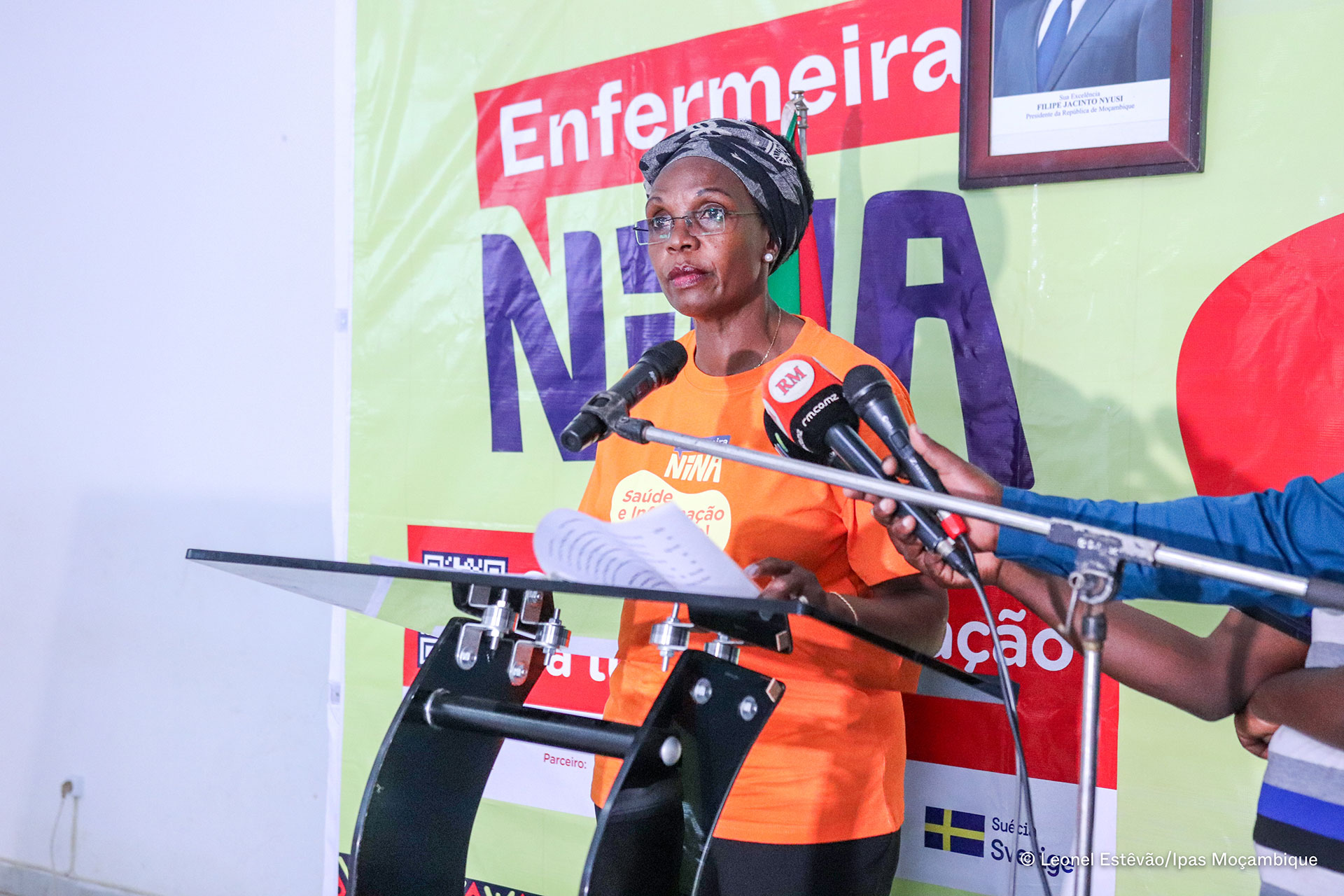
Governor of Niassa Province, Elina Judite Massengele, delivers remarks during the launch event for Enfermeira Nina, highlighting the importance of digital tools to expand reproductive health access.
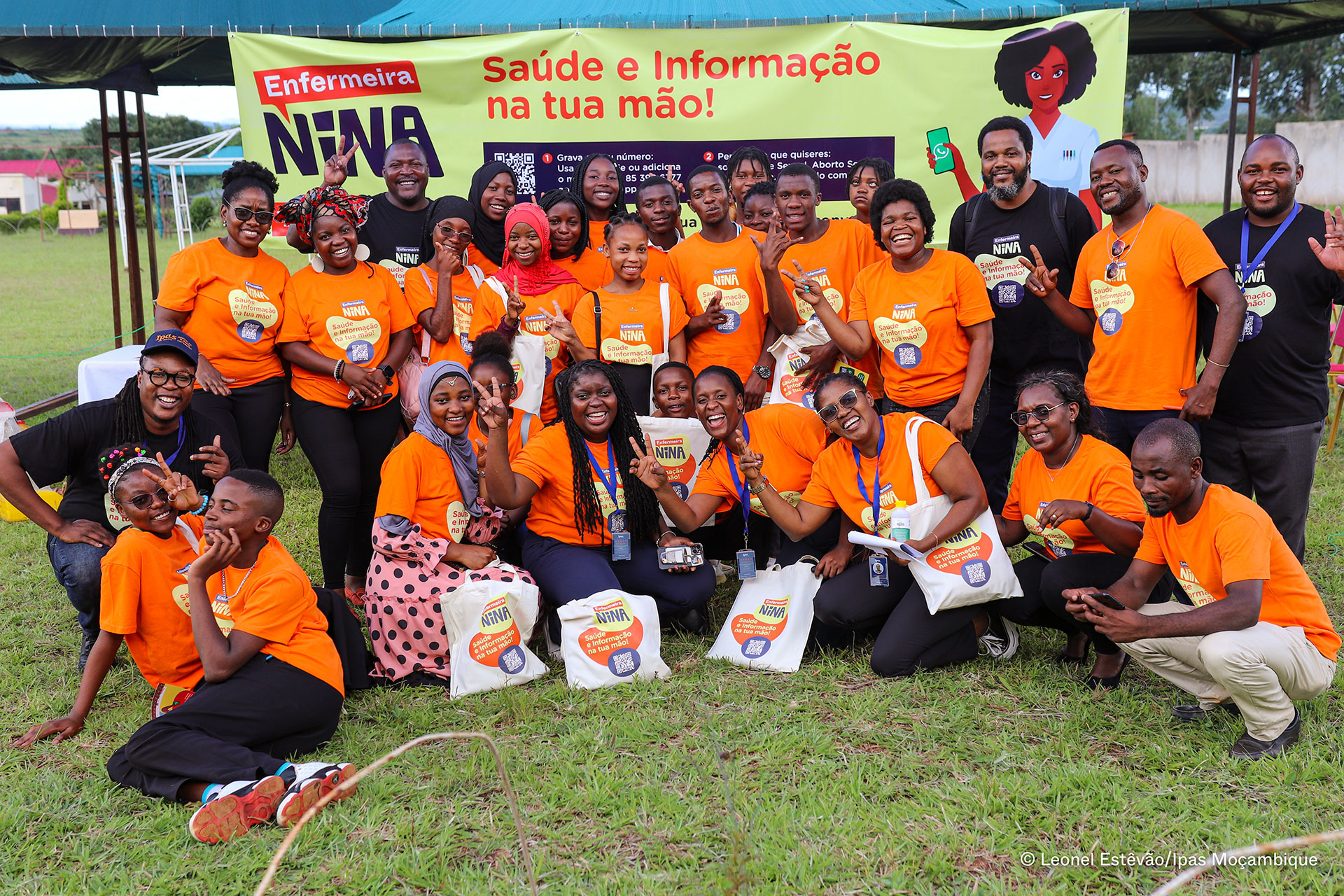
Adolescent girls and Ipas Mozambique staff celebrate at the launch event for Enfermeira Nina in Lichinga, in Niassa Province.
Bridging digital and physical worlds for a just future
As our work accelerates, the Reproductive Justice Resource Center continues to evolve as a space for ongoing learning, co-creation and innovation—where tools like Nurse Nina are strengthened by dialogue and shared community exchange.
“These initiatives embody Ipas’s vision of building a future where information, dialogue, and collective action drive meaningful change for women, adolescents, and young people across the country,” says Salamandane. “The future of reproductive justice in Mozambique is bright.”