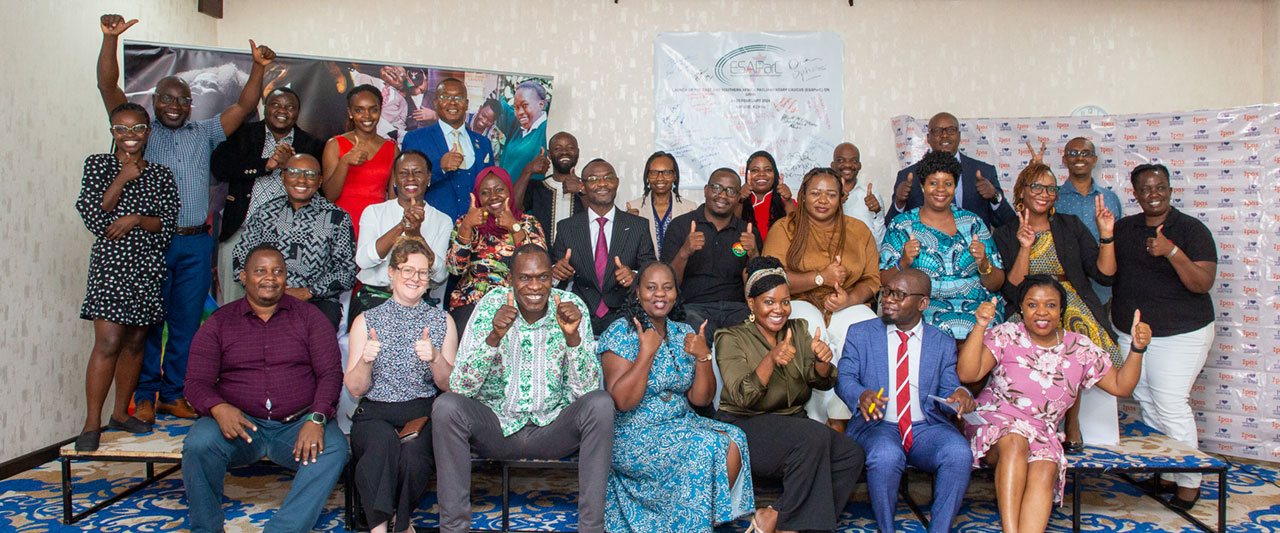




A high level gathering in South Africa in May 2025 brought together nearly 40 members of parliament from G20 countries, East and Southern Africa to discuss the economic benefits of investing in women’s health.
The parliamentary conference dubbed The Economic Benefits of Investing in Women’s Health reinforced the importance of countries working together to strengthen collective responses to global challenges and make sure no one is left behind.
This is part of Ipas’s longer-term strategy to build legislative support for sexual and reproductive health and rights, which began with the 2024 Eastern and Southern Africa Parliamentary Caucus launch.
Ipas Africa Southern Region and Ipas Africa Alliance organized the conference in partnership with the Global Alliance for Health, Rights and Development (a project of the European Parliamentary Forum on Sexual and Reproductive Rights), Eastern and Southern African Parliamentary Caucus on Sexual and Reproductive Health and Rights and UNFPA South Africa. Also in attendance were representatives from the Organisation for Economic Co-operation and Development‘s Development Assistance Committee countries the Southern African Development Community , and the East African Legislative Assembly.
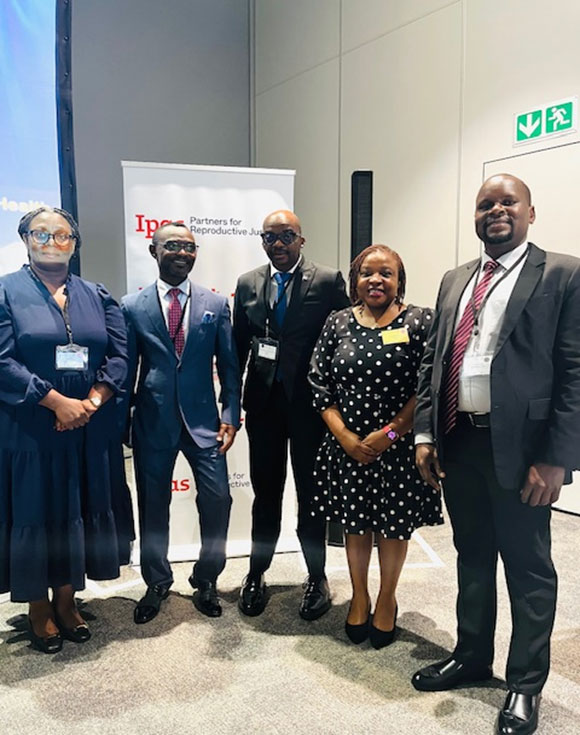
Pictured: Ipas staff and partners at the G20 meeting, from left: Ipas Development Director Pansi Katenga, Member of Parliament, Malawi and ESAParC Chair Hon Ben Phiri, Botswana Speaker of Parliament and ESAParC member Hon Dithapelo Keorapetse , Regional Policy and Advocacy Manager, Ipas ASR, Tafadzwa Madondo, and Ipas Africa Alliance Director Dr Musoba Kitui.
A catalyst for a legacy
“Now we have a shared mandate. Let us not allow this conference to be remembered as a gathering of good intentions,” said Hon. Daylin Mitchell, Speaker of the Western Cape Provincial Parliament, South Africa. “Let it be remembered as a catalyst for a legacy. A legacy with South Africa and the Western Cape that stood boldly in the face of inequality, lifted the voices of women and girls and inspired action around the world.”
The conference highlighted the transformative economic and social impacts of investing in women’s health, particularly sexual and reproductive health and rights, as a key strategy to advance global development and gender equality.
At the close of the two-day conference, parliamentarians signed a bold and united ‘Statement of Commitment on Women’s Health’ to present to the presidency of G20 as a reflection of their collective resolve. They shared responsibility to advance women’s and girls’ health for the benefit of present and future generations. The statement outlines a comprehensive set of actions, including:
- Reaffirming international agreements such as the Elimination of All Forms of Discrimination Against Women, the International Conference on Population and Development Programme of Action, the Beijing Programme of Action, the Maputo Plan of Action and the Sustainable Development Goals and other relevant agreements.
- Recognizing the profound economic benefits of investing in women and girls’ health, the attending parliamentarians committed to prioritizing investments in sexual and reproductive health, including maternal health, family planning, menstrual health, adolescent and mental health.
- Investing in women and girls in Science, Technology, Engineering, and Mathematics to strengthen health systems.
- Closing funding gaps by advocating to uphold Official Development Assistance for sexual and reproductive health and rights, exploring innovative financing mechanisms, and strengthening domestic resource mobilization.
- Resisting the rise of anti-gender policies aimed at undermining progress towards the realization of women and girls’ rights and gender equality and opposing anti-gender movements.
- Supporting initiatives that increase access to comprehensive sexual and reproductive health education and foster youth leadership in advancing women and girls’ health.
- Addressing the impact of humanitarian crises and ensuring that women’s health is central to humanitarian responses and post-crisis recovery efforts, particularly for the most vulnerable populations.
- Supporting the integration of digital health innovations that improve access to essential health services, particularly for women and girls in rural and underserved areas, ensuring that technological advancements are inclusive and gender sensitive.
This conference marked a critical moment in reinforcing the role of parliaments in ensuring that women’s and girls’ health remain a priority in the global development agenda and in highlighting that the path forward requires coordinated, sustained efforts from governments, international organizations, civil society, and the private sector. These commitments emphasize the recognition that the health and rights of women and girls cannot be protected in isolation.