







For nearly two decades, Ipas Zambia has worked closely with the Ministry of Health to reduce maternal deaths caused by unsafe abortion and to expand access to safe abortion services nationwide. However, despite the progress made, persistent and emerging challenges, including the growing impact of climate change, continue to affect sexual and reproductive health and rights (SRHR).
As climate-related disasters intensify globally, Zambia has been severely affected. The country has been experiencing adverse impacts for several years, including an increase in the frequency and severity of seasonal droughts, occasional dry spells, increased temperatures in valleys, flash floods, and changes in the growing season, according to the United Nations Development Programme.These extreme weather events often cut off communities from central health facilities, limiting women’s access to timely and essential reproductive health services.
“Limited access to contraceptives leads to a rise in unplanned pregnancies, and during periods of climate-related stress or emergencies, cases of unsafe abortion tend to increase. This often results in severe reproductive health complications such as sepsis, long-term disability, or even maternal death,” says Roina Mulenga, health systems advisor at Ipas Zambia.
An innovative on-the-job training model
In 2019, Ipas Zambia, in collaboration with the Ministry of Health, developed and adapted an innovative on-the-job training model to strengthen the capacity of midlevel health-care providers in delivering comprehensive abortion care and long-term contraceptive services in all 10 provinces in the country. The goal is to ensure women and girls who are disproportionately affected by climate change-related disasters have access to critical health services, bodily autonomy, and life-saving care.
“Health facilities, especially in the northeast of the country, are frequently cut off from district pharmacies during the rainy season due to severe flooding. In addition, the road network in these areas is extremely poor, with hilly terrain that makes navigation and delivery of essential medicines even more difficult. These geographic and climatic challenges significantly disrupt the timely supply of health commodities and services,” says Mulenga, who is also the project coordinator.
During the pilot phase of the project in 2023, 10 providers were trained as trainers, who in turn gave on-the-job trainings for an additional 30 providers. Following this success, Ipas and the Ministry of Health scaled up to three additional provinces, training 110 additional trainers who then conducted on-the-job trainings for over 600 health-care providers.
Benefits of on-the-job trainings to communities
For communities, the on-the-job training model has meant sustained access to comprehensive abortion care services even during floods or transport disruptions and no interruption in services, as providers are trained within their own facilities.
The model has also equipped local providers to manage real-time clinical needs, reduced the need for providers to refer women to far-away clinics that are hard to reach, and enhanced trust and engagement between communities and their local health systems.
Additionally, it has led to resilient health-care systems adapted to the realities of climate change and improved health outcomes for women who always have access to a trained abortion provider.
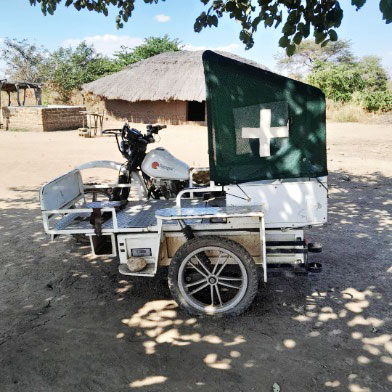
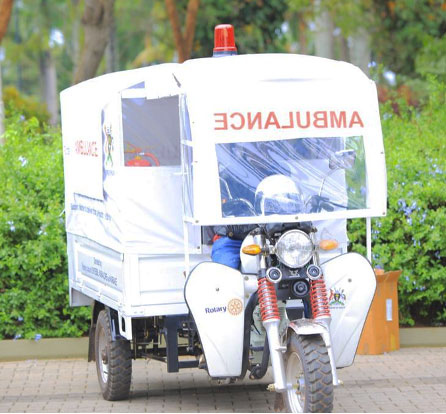
Trainers and other health-care providers involved with the training program use modified motorcycles or bicycles, known as “Zambulances,” to reach women who are completely cut off because of flooding.
A scalable and sustainable model
“The trainers are empowered to train fellow health-care providers in the same facility. The training sessions are also held at the health facilities, so it’s cost-effective as there are no transport or per diem costs for the participants. In the end, we can create a large, competent pool of health-care providers spread across the country, even in the remotest of places cut off by flooding,” explains Mulenga. “It’s a scalable and sustainable model.”
Key achievements to date
- 120 trainers trained across 4 provinces
- 600+ midlevel providers trained in comprehensive abortion care using the on-the-job training model
- 20 mentors oriented to travel to clinics and support providers with ongoing skill building
- Final on-the-job training curriculum provided to Ministry of Health for possible use nationwide in training public health workers
- 20 mentors oriented to provide clinical supervision and skills reinforcement
- Finalized OJT curriculum submitted to MOH for consideration for national integration
- Improved provider confidence, reduced stigma, and strengthened abortion service quality
“By training providers within their own communities and health facilities, this model ensures that women and girls—especially during emergencies—have continued access to life-saving abortion and other sexual and reproductive health services,” says Mulenga, “We’re building local capacity, reducing reliance on external training sites and reinforcing the health system’s ability to respond in times of climate-related crisis.”
The on-the-job training model has proven to be a climate-resilient, cost-effective, and community-centered solution to improving abortion accessin Zambia. With a successful pilot in Muchinga and scale-up across Luapula, Southern, and Eastern Provinces, Ipas Zambia is well-positioned to now support national scale-up. With continued donor and government support, this model can transform reproductive health delivery nationwide, ensuring no woman is left behind, even in the most climate-affected regions.