







Study
Published in The Lancet Clinical Medicine
Led by Ipas in partnership with Ibis Reproductive Health, the International Rescue Committee, African Population and Health Research Centre, and Resilience Action International, this research is one of only a few studies on abortion in humanitarian settings. It provides critical new data on abortion from communities often excluded from sexual and reproductive health research.
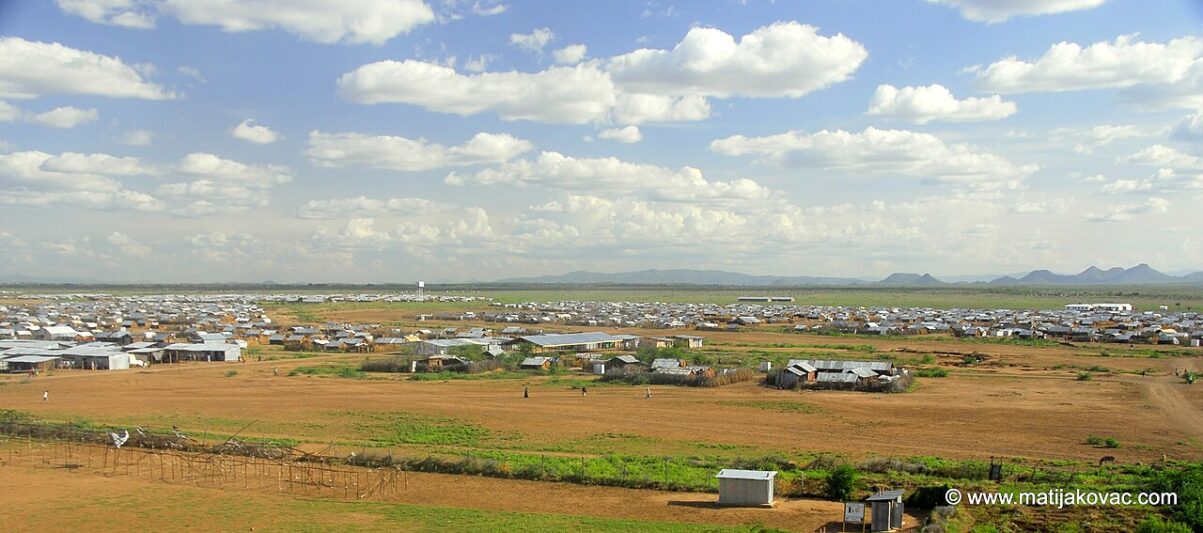
Pictured above: Kakuma refugee camp, located in Kenya. Photo taken by Matija Kovac (Creative Commons)
Main takeaway
In two of East Africa’s largest refugee settings—Bidibidi (Uganda) and Kakuma (Kenya)—researchers conducted the first-ever study to estimate abortion incidence using respondent-driven sampling (RDS) in a humanitarian context. The results highlight an overlooked reality: displaced people seek abortion care at higher rates but face limited options and extreme risks from resorting to unsafe methods.
Why it matters
Safe abortion services are often left out of reproductive health care in humanitarian settings due to a lack of trained providers, political concerns, and unclear laws. Yet in the sites studied, abortion rates remain high: 52 per 1,000 women of reproductive age in Bidibidi and 55 per 1,000 in Kakuma. These rates are slightly higher than the East African regional average, even though people in these settings face more barriers to access. This research proves that abortion is common in these humanitarian settings, and often through unsafe methods. It also highlights the urgent need for safe abortion care not only in these communities but also in others across the continent where similar conflict-affected populations have sought refuge. It gives humanitarian groups, policymakers, and researchers vital information they need to plan, carry out, and assess programs that make safe, WHO-recommended abortion methods easier to access in these settings.
Key findings
- Abortion is common despite few safe options. The estimated annual abortion rate in Bidibidi was 52 per 1,000 and in Kakuma it was 55 per 1,000. Yet only 5 of the 27 health facilities in these settings reported providing safe abortion services.
- Most abortions were done with unsafe methods. Almost all were self-managed, and very few followed WHO-recommended methods. Some people used abortion pills, but most did not know the correct drugs or doses. Awareness of abortion with pills was also low.
- Complications are widespread, and many do not seek care. Nearly all participants reported at least one complication (88% in Bidibidi and 98% in Kakuma). Many did not seek care because they feared stigma or arrest.
- People seek abortion for common reasons, but the stakes are higher for refugees. Participants cited economic hardship, lack of partner support, or fear of abandonment, which are common reasons in non-crisis settings. For people living in displacement, who lack stable income, family support, or basic services, an unintended pregnancy can bring even greater hardship.
- Sexual violence is a significant factor. Although researchers did not directly ask whether the pregnancy was the result of rape, 1% identified it as their reason for seeking an abortion, and about 20% reported experiencing sexual violence in the past year.
From research to action
The Ipas-led team secured a follow-up grant from Elrha’s Research for Health in Humanitarian Crises (R2HC) Programme to put the research findings into practice through a coordinated set of improvements. They strengthened the community health worker training package, introduced the Aunty Jane hotline to support abortion seekers in local languages, and trained pharmacists and drug sellers to better support people using abortion pills. Implementation looked different in each setting: Ipas played a direct role in Kakuma, while in Bidibidi, these improvements were integrated into existing programs for long-term sustainability.
The team also held a week-long workshop in the camp, where community members, data collectors, and Community Advisory Board members worked with the research team to create simple, multi-language materials. Together, they developed information on the risks of unsafe abortion, safer use of abortion pills, and how to reach the hotline, and they helped update local health education materials to make them clearer and more accurate.
A method worth replicating
Using respondent-driven sampling (RDS), the research team built trust and reached people often missed in traditional surveys. RDS starts with a few trusted participants who refer others in their networks. Those referrals grow into a chain, allowing researchers to connect with people who are hard to reach. This works when the topic is sensitive, like abortion, or when the population doesn’t show up in regular surveys, like people displaced by armed conflict. This method can help generate data that reflects the broader community—not just the most visible.
This companion article in BMJ Open offers a step-by-step blueprint to replicate this approach in other crisis-affected settings: