








Abortion stigma causes more than social harm; it is a measurable barrier to global health. It determines whether someone feels safe seeking abortion, whether a provider feels confident about offering care, and it can influence whether communities and governments protect or restrict reproductive autonomy. Drawing from over 18 years of research, Ipas’s continuing work to understand and fight abortion stigma shows where it hides and how it works—and offers evidence-based strategies to confront it.
Why abortion stigma fuels a global health crisis
Abortion stigma targets people who seek abortions, their health-care providers, and anyone associated with abortion care. Research has long shown that stigma increases unsafe abortion because when people delay or avoid care out of fear of judgment, they are more likely to seek out unsafe options.
Stigma also distorts how communities understand abortion in the first place—fueling the myth that it is rare, or that only ‘certain types of women’ seek it. (In reality, abortion is a common experience across every country, legal context, and demographic.) And stigma extends far beyond individuals seeking abortion:
- When providers face stigma, they may avoid offering services altogether.
- When communities hold stigmatizing beliefs, they exclude and discriminate against those associated with abortion.
- When lawmakers operate in a climate of stigma, restrictions become easier to pass and harder to challenge.
The evidence is clear: Stigma is not inevitable, and it can be dismantled.
The good news from our years of research is that we know how to fight abortion stigma—and win. The solutions that work are ones we’re using alongside our partners every day. And we continue to refine approaches based on our latest evidence.
Here are six key insights from our 2025 research:
- Stigma, not just law, makes abortion care feel out of reach
Research from Uganda shows that restrictive laws plus provider judgment and disrespect make women afraid to seek care, proving that reducing abortion stigma through provider training at public facilities can expand access and improve quality of services that legally exist. - Adolescents face layered stigma
A study spanning Ethiopia, Malawi, and Zambia reveals that adolescents often conceal their sexuality, pregnancies, and abortion decisions due to fear of judgment—causing delays and unsafe practices even when legal abortion is available. This study shows it is crucial to challenge stigma and offer youth-centered services to improve access to safe abortion for young people. - Everyday communication can either shame or support
Evidence from Ugandan public facilities shows that when clinicians use compassionate, client-centered communication, women report better experiences and less fear, proving that ensuring respectful dialogue from providers is more than courtesy: it’s a frontline anti-stigma intervention. - Better measurement surfaces stigma’s hidden impacts
New methods for capturing when people recognize a pregnancy and for measuring sexual and reproductive wellbeing show how fear, delay, and constrained choices are often driven by stigma. Both studies not only reveal barriers that routine statistics miss, they offer actionable insights to overcome them. - Community- and midwife-led models help normalize abortion
Studies from the Democratic Republic of Congo and East Africa show that midwife-led, person-centered services and community dialogues (including radio shows and storytelling by people who’ve had abortions) reduce fear of mistreatment and break the silence that keeps stigma in place. - Humanitarian responses don’t account for stigma—and fail to include abortion needs
Recent data from crisis situations in Uganda and Kenya show that while abortion is prevalent, it is often unsafe and frequently excluded from emergency health packages. This study proposes a method to identify individuals typically overlooked in traditional surveys, enabling the collection of better data on abortion needs in crisis settings.
Studying abortion stigma
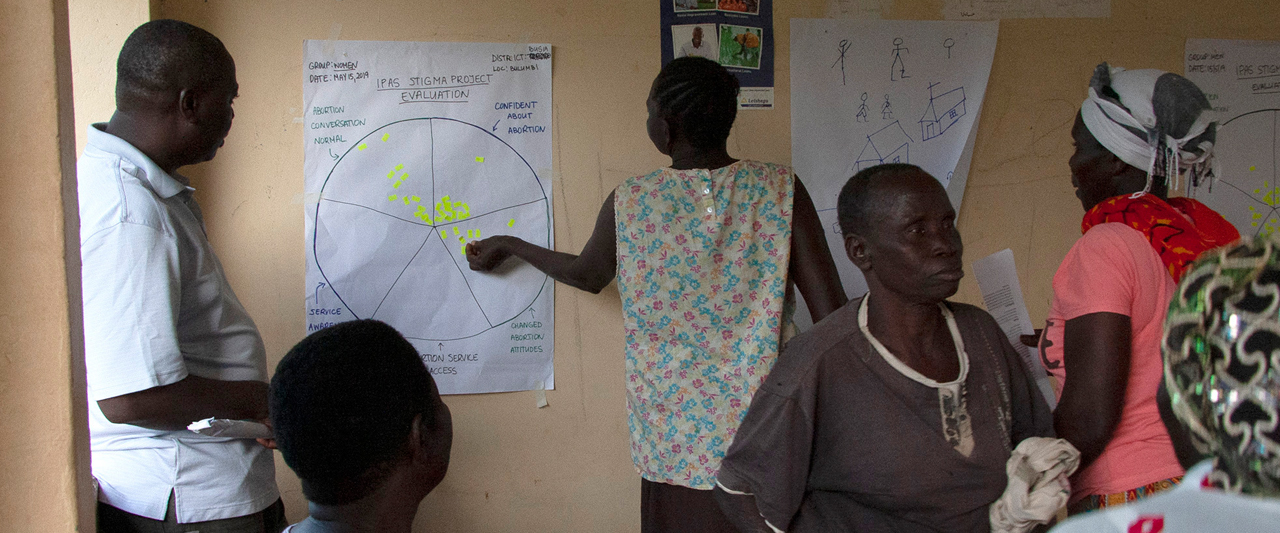
Ipas began building a body of evidence on abortion stigma in 2008, recognizing that at the time there were no quantitative tools readily available to measure it from the perspective of individuals and communities. That work led to the development of our Stigmatizing Attitudes, Beliefs and Actions Scale, which captures three distinct dimensions of stigma: negative stereotyping and labeling, exclusion and discrimination, and fear of contagion. Ipas and our partners continue to use this research tool to assess stigma in different settings and design effective programs to dismantle it.
Breaking the cycle
Learn more about our work to end abortion stigma
What would a world free from abortion stigma look like?
Research shows what abortion stigma is costing us