
|
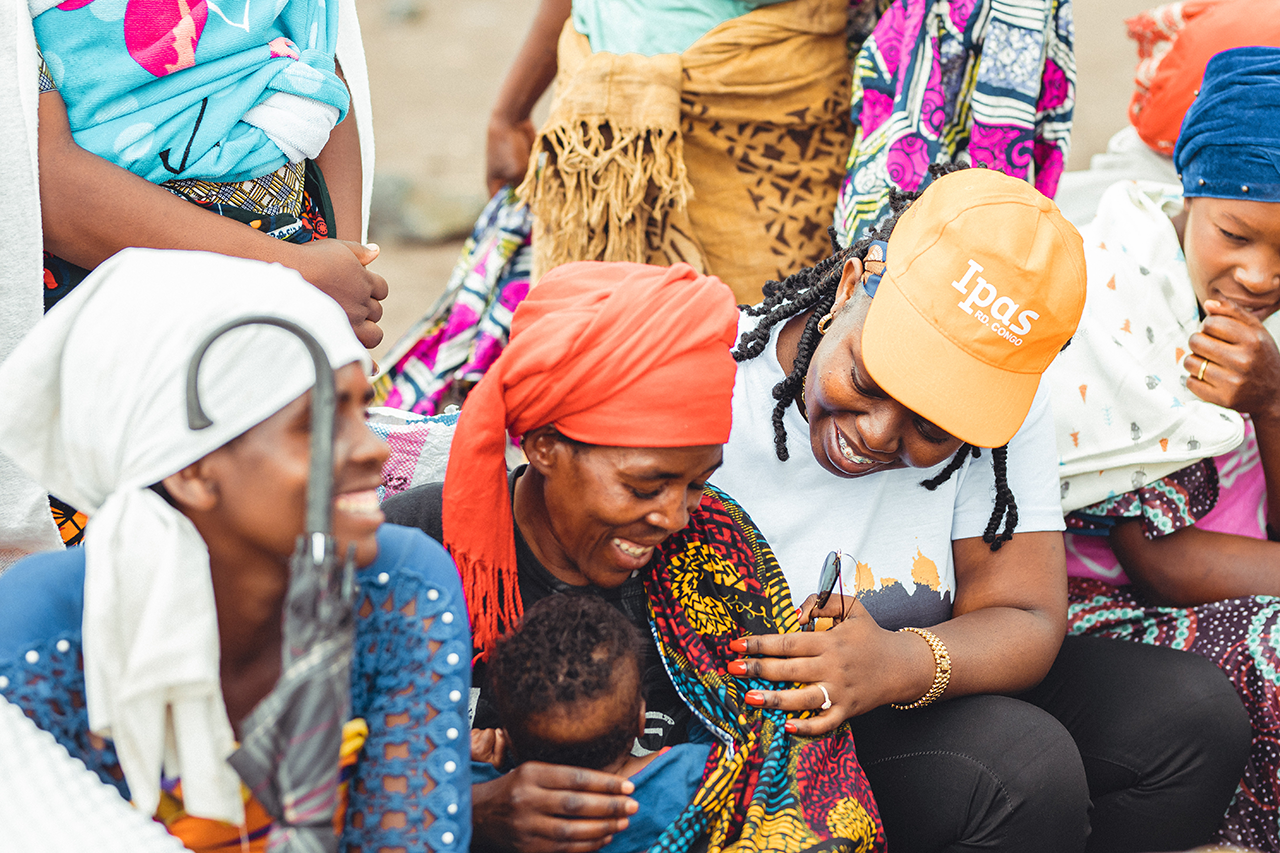
| A pregnancy caused by rape can endanger a young girl’s health, education and ability to determine the course of her life. |
| Photo courtesy of Richard Lord. |
In 2003, the case of a 9-year-old Nicaraguan girl made headlines around the world. Living in Costa Rica with her migrant worker parents, the girl known only as “Rosita” had been raped and impregnated by an adult attacker. Her parents and women’s advocates struggled against the state and doctors who tried to force Rosita to bear a child — even though she was still a child herself.
While Rosita’s plight may seem unique, it was hardly an isolated case. In August, an 11-year-old had the first legal abortion in Colombia, after having been raped by her stepfather. Bolivia was also recently polarized when judges refused to approve pregnancy termination for a 10-year-old violated by a teenage cousin. And just this month, Puerto Rican officials are mulling whether a 10-year-old should have an abortion; the girl’s mother found out her daughter was pregnant when the child’s school uniform no longer fit. The girl’s stepfather was arrested, and the girl is currently in the custody of the island’s family department.
In some parts of Latin America and the Caribbean, where abortion is typically tightly restricted, advocates are campaigning to make sure the youngest victims — sexually abused minors — can have therapeutic abortions, or those performed to preserve the girls’ health or life.
In Nicaragua, Ipas Central America and other nonprofit organizations observed Sept. 28, which is the Day to Decriminalize Abortion in Latin America and the Caribbean. They took the occasion to sound the alarm about child sexual abuse and its consequences. As one of its activities, Ipas Central America took part in a radio “hablatón,” or speakout, on the issue of therapeutic abortions for young rape victims.
Marta María Blandón, Director of Ipas Central America, said that an
unofficial survey of Nicaragua’s main daily newspapers during 2005 found
references to 280 reports of girls’ being raped and that at least 33 of those
cases resulted in pregnancies. But how many of those pregnancies were terminated
is unknown, and the magnitude of such abuse and resulting pregnancies is
undoubtedly far higher than the media reports suggest.
Blandón
said the issue of the “niñas madres” — girl mothers — affects the child, the
family and society in general.
“In addition to the physical and emotional pain of unwanted pregnancy, this event means the death of the girls’ childhood. It obliges them to assume a role they do not understand, for which they are not prepared, that they have neither planned for nor dreamed of. In their child’s world, they have dreams [appropriate] for their own age.”
She continued: “The family tries to help the girl assume the role of the girl mother, but what she wants is to play, to study, to discover. … This unexpected responsibility affects the girl but also extends to the nuclear family. The majority of these cases occur in families with scarce resources, aggravating the [financial] situation and contributing to a perpetual cycle of poverty.”
Sexual abuse and forced pregnancy also violate girls’ right to be protected from such mistreatment. The international Convention on the Rights of the Child says that countries “shall take all appropriate legislative, administrative, social and educational measures to protect the child from all forms of physical or mental violence, injury or abuse, neglect or negligent treatment, maltreatment or exploitation, including sexual abuse, while in the care of parent(s), legal guardian(s) or any other person who has the care of the child.”
Under Nicaragua’s current penal code, there is no explicit right to abortion for sexually abused girls. The only abortions permitted under law are therapeutic abortions. And even so, therapeutic abortions are allowed only if they are deemed medically necessary and the procedure is approved by multiple doctors and the girl or woman’s guardian or husband.
But the provision allowing therapeutic abortion is under fire, as opponents — including powerful interests from the Roman Catholic Church and other religious denominations — lobby for its elimination and therefore, a total abortion ban similar to that of El Salvador. On Oct. 6, opponents staged a national march to demand that therapeutic abortion be eliminated and that women who have therapeutic abortions be imprisoned for 10 to 20 years, sentences that often exceed those given in homicide cases.
The right to therapeutic abortion has become a key issue in the run-up to the
Nicaraguan elections; on Nov. 5, the country will select a new president and
National Assembly, the country’s legislative body. One presidential candidate
has come out against therapeutic abortion, another is in favor of allowing it,
and the positions of the three other hopefuls are unclear. The outcome could
determine whether therapeutic abortion continues to be an option for Nicaraguan
girls and women.
For more information, contact:
Kirsten Sherk
Senior Associate, Media Relations
e-mail: sherkk@ipas.org
phone: 919.960.5612
fax: 919.929.0258