
|
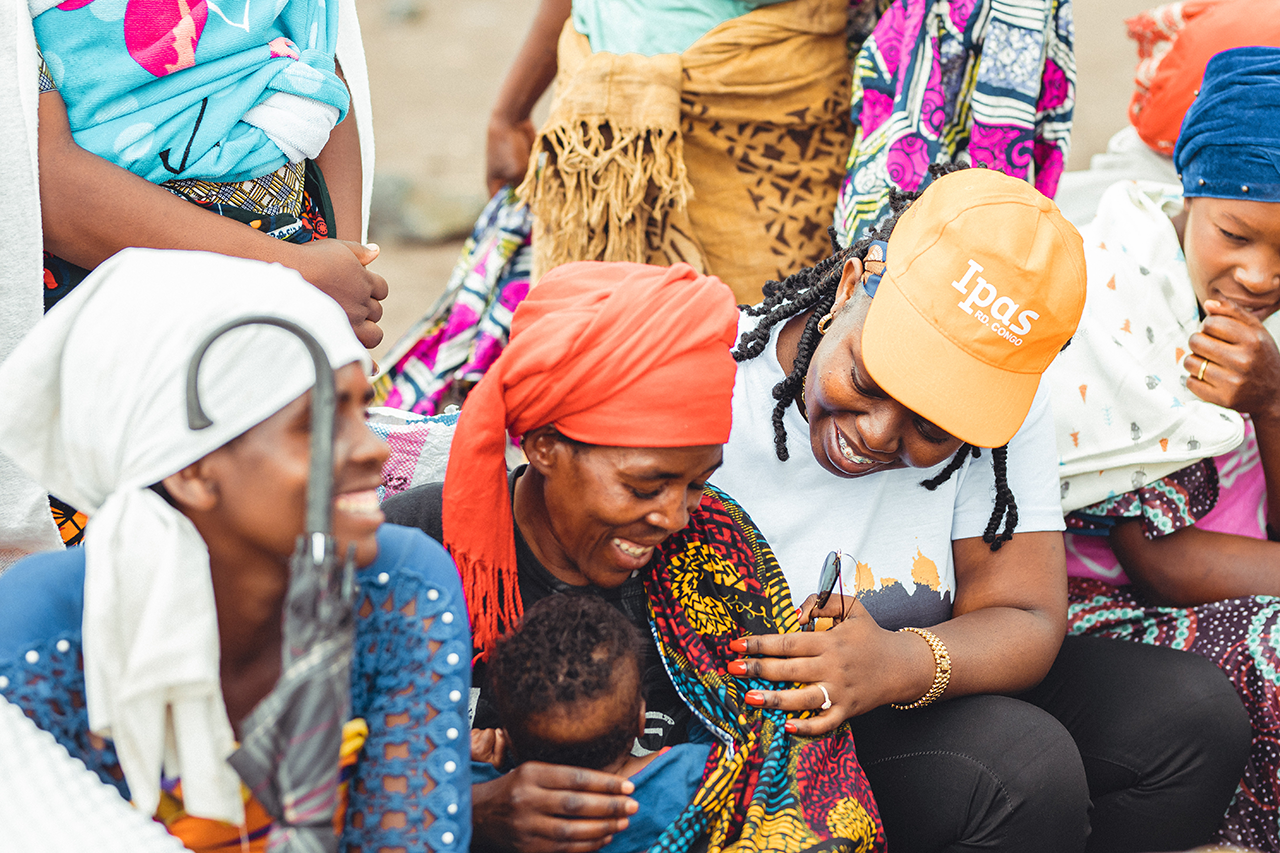
| Photo courtesy of Ipas. |
In 1948, Eleanor Roosevelt said, “The future must see the broadening of human rights throughout the world…. In a truest sense, human rights are a fundamental object of law and government in a just society. Human rights exist to the degree that they are respected by people in relations with each other and by governments in relations with their citizens.”
Roosevelt's call to the world to uphold basic human rights still echoes almost 60 years later, especially on December 10, International Human Rights Day. Governments around the world have pledged to protect women’s rights to life, health, bodily integrity, privacy, liberty, freedom from discrimination and freedom from cruel, unusual and degrading treatment. Access to safe, affordable reproductive care — including abortion services — falls under a large umbrella of human rights. But with almost 67,000 women dying each year from unsafe abortions, the world’s governing bodies aren’t living up to their promises.
“Only a united movement for all of our human rights will save us,” said Loretta Ross of SisterSong Women of Color Reproductive Health Collective. That united movement is still evolving.
The recent issue of Ipas’s A — the abortion magazine explores how abortion-rights advocates, acting as human-rights advocates, become part of a larger, united movement to promote the equality of all people. An excerpt from an article by Deborah Billings, “Human Rights in Latin America: from Discourse to Reality,” highlights the challenges of bridging the gap between human rights and reproductive rights, in Latin America and beyond:
…Both “voluntary motherhood” and access to safe and legal abortion have figured prominently in civil-society efforts to create policies and laws that would guarantee women’s rights, including their rights to life and health. Such efforts place the State at the forefront of creating the conditions necessary for realizing these rights, which are of particular importance to marginalized women who have the least access to safe abortion services, regardless of existing legislation. This includes young, poor and rural-based women, as well as women who are victims/survivors of sexual violence.
Challenges remain, both in Latin America and globally. Progress over the last 20 years to bridge the gap between civil and political rights activists and those leading sexual and reproductive rights movements has been slow. This call to action only now is being heeded, with groups such as Human Rights Watch and Amnesty International taking public, progressive positions on gender-based violence and abortion. In Latin America, efforts have combined human-rights discourse with public-health arguments to significantly modify existing abortion legislation. But while advances in increasing safe abortion access in Mexico City and Colombia provide models for positive change, regressive legislative reforms in Nicaragua and El Salvador tell us that not all governments are committed to preventing unnecessary death and suffering from complications related to unsafe abortion.
Addressing impunity and bringing a sense, both in perception and reality, that people can advocate for their rights and seek reproductive health care without government retribution are among the most formidable challenges that movements face in Latin America. A fully developed system of human rights requires that local law and justice systems are fair, just and widely trusted. Without these elements, human-rights discourse remains at the level of declarations and conversations without significant recourse to action.
Also in A, Monica Roa, the lawyer who filed a complaint with the Constitutional Court of Columbia over the country’s restrictive ban on abortion, shares how she and other Columbian activists used the right to health as a platform for change. Roa’s argument — that the ban violated Columbia’s own commitments to international human-rights treaties — prevailed. The law was overturned last year.
In a short letter, Charles Ngwena, professor at University of the Free State in South Africa, argues the value of equality and human dignity in framing abortion as a human right:
Human dignity allows us to capture the self-worth of women as individuals whose life choices must be respected. …Equality captures the historical vulnerability and disadvantages of women as a group and the adverse impact, including unsafe abortion-related mortality and morbidity, on women when they are denied abortion.
Click here to read the full text of all articles
featured in A magazine.
For more information, contact media@ipas.org